Flexible Value PropositionFlexibilizando a proposta de valor
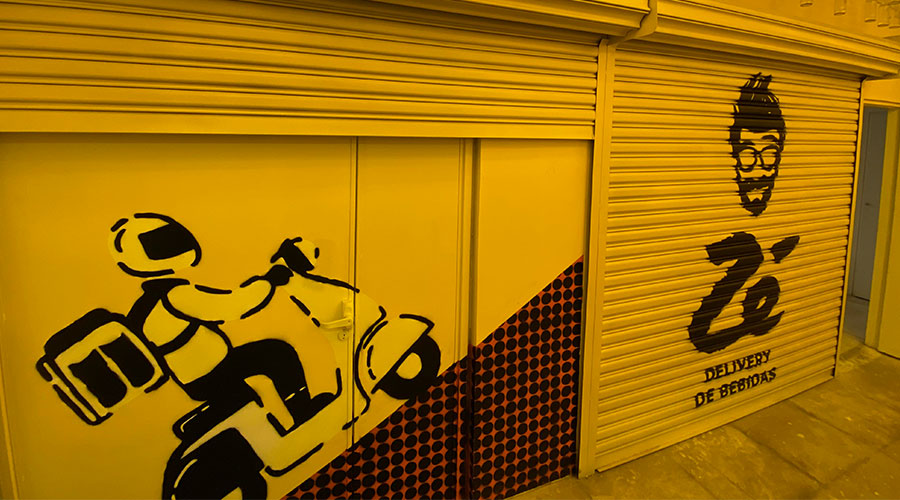
To connect Ambev’s D2C and B2B operations (Ambev is part of AB InBev, the world’s largest brewer), our goal was to design a Flexible Value Proposition: a scheduled delivery service in the Zé Delivery app, fulfilled through Ambev’s logistics network. It would open a new revenue stream through the supply chain, and let us sell Chopp Brahma on the platform.
Launch the serviceLançar o serviço
Diverging: Empathizing with data
• Market size opportunity
• Gather research available
• Shadowing (field research with non-users)
• User interview
Defining the journey
• Benchmark
• Ideation and iteration
• Operations setup
• Usability testing
Converging: building and measuring
• Operation setup
• Metrics defining
• Business rules
• Rollout
Big picture: where online drink sales are growing
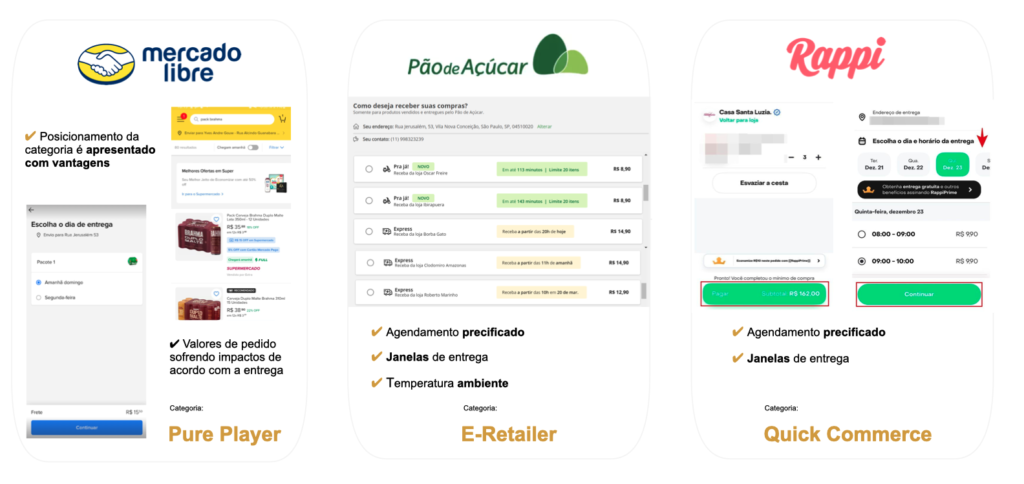
Online drink sales by channel, R$ mm (each card on its own scale). Pure players are the fastest-growing channel and already sell planned, cheaper baskets. That is the share a flexible value proposition could win back, using Ambev's B2B logistics.Vendas online de bebidas por canal, em R$ milhões (cada card na própria escala). Os pure players são o canal que mais cresce e já vendem cestas planejadas e mais baratas. É essa fatia que uma proposta de valor flexível poderia recuperar, usando a logística B2B da Ambev.
Service characteristics:
✔ Warm beverageBebida em temperatura ambiente
✔ Free shipping on next day delivery / schedule
✔ Promotion / Low price to persuade the user
✔ Mixed portfolio
✔ Charged delivery with fixed window / hours
Building rapport: understanding the value of Shipping service to the consumer via moderated interview
Context: We need to analyze in depth the user’s perception of using the term ‘shipping’ in the app
Research objectives: Measure the perception of value in relation to the ‘Delivery’ service. Understand the pains and desires around delivery, and why consumers see it only as a cost, through qualitative interviews.
Who I wanted to talk toCom quem eu quis conversar
The whole user lifecycle, from people who had never ordered to heavy users.O ciclo de vida completo do usuário, de quem nunca pediu a quem pede sempre.
Intro - icebreaker 🧊
• How long have you been ordering drinks per app?
• How is your day when you order ? Do you plan a event?
• How many orders do you place per month?
• Do you usually order from any other delivery service?
• What is the worst part of buying from the market?
• Have you ever abandoned an order because of the delivery fee?
Feel and think questions 💭
• What do you feel when you see us change the word Shipping to Delivery in the app?
• What are your thoughts on Zé Delivery’s delivery service?
• What do you think of Zé’s delivery time?
• How can a delivery service add value to you?
Listen and see questions 👂🏼
• What is your perception of the values described when closing orders?
• Have you ever discussed delivery fees by ordering drinks with friends?
• The information in the app is enough for you, do you miss something?
• How was the experience with Zé’s delivery people?
Does and Talk questions 🗣️
• Would you accept paying less for a delivery without prioritization (one or two days, with no defined time window)?
• Would you accept to pay more for a priority or turbo delivery, being sure that you would receive it in the stipulated time?
• If you find the same product in Zé, in an advertisement / market communication: you buy it in Zé or in the Market (with a Delivery value of R$5.49). Why?
• Have you ever had problems with weight, or had to place an order again because of the volume of orders under the guidance of the store?
• Rate Zé Delivery’s service from 0 to 10
Patterns 🔎
– We observed that 16 of 20 participants believe that Zé can add value with the delivery service. This means that we can test different variable models.
– We observed that 12 of 20 participants do not discuss the value of deliveries when they are among friends. This means that there are different use cases to explore.
– We observed that 3 of 20 participants plan their purchases. This means that they do them casually, through stimulation (offer).
– We observed that 10 of 10 participants feel that they need some improvement in the delivery journey. This means we can test flow and route planning improvements.
– We observed that 16 of 20 participants prefer not to buy at the supermarket, for convenience. This means that they think the value of the product is more important than the delivery.
– We observed that 18 of 20 participants understand the values described when closing orders. This means that the existing information in the app is clear to the user.
Insights 💡
– Based on the subject that we can add value to the delivery service, an insight is: planned, turbo and standard (bundled) deliveries are valid hypotheses.
– Based on the subject that delivery value is not discussed in a social occasion, an insight is: we can test different options associated with planned events.
– Based on the issue of purchasing without prioritizing delivery, an insight is: we can add this value proposition to the planned delivery.
– Based on the subject that the user can choose for shopping places, an insight is: we should focus on Zé’s differentials and add them as value.
Important transcriptions 🔊
Operations Setup: generating value proposition
It’s all about validating a logistics business model integrated with Ambevtech / Bee’s, so we need to propose to the consumer offers with the same characteristics in both ecosystems, and also carry the insights gathered on the interviews. See the 6 decisions below:
We selected 13 SKUs for this category, using varied criteria (from NAB to Ready Drinks instead of only Beer). This point comes from the observation of user research – if they stock and order scheduled products, they have adherence in different kinds of categories of products.
We defined a limit for the number of packs, to not overload the shipping process and to not represent a problems between DTC x B2B clients. With a cheaper offer, users could benefit for different reasons.
Warm, not cold, drinks: validating savings on refrigeration, one of the highest costs in the supply chain, and matching the AmbevTech / BEES model.
Regular fees, so as not to interfere with other promotions and initiatives on the app, clearly selling items with discount due the temperature of the products.
Considering 2 business models, divided by casual and scheduled orders (and the respective sub-categories), we decided to move forward with the next day model, delivering orders by 5pm within a 10km radius from the store.
Online payment only, ensuring we would not lose money on undelivered items, wrong address and cancelled orders.
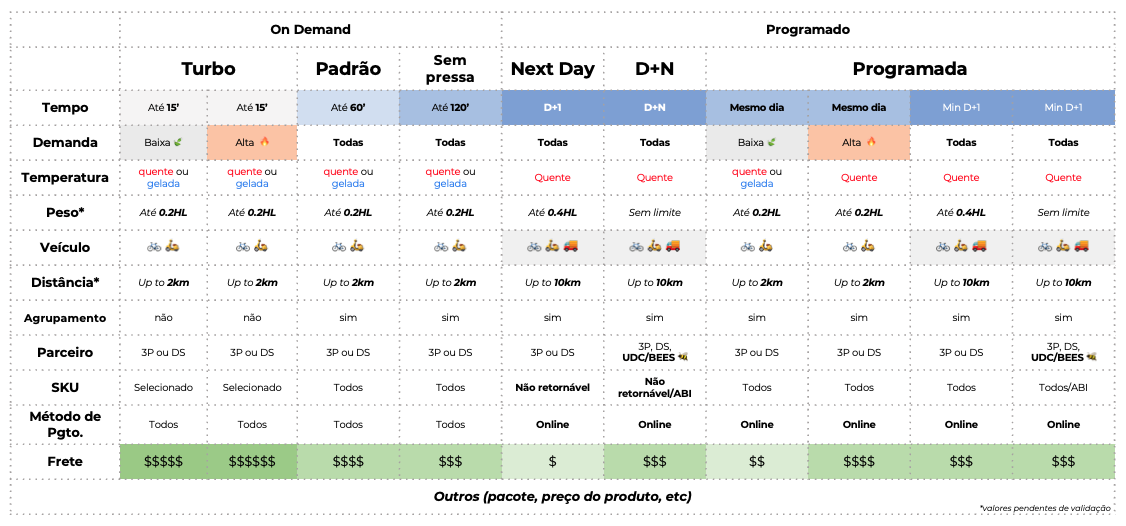
New use cases study: analyzing the complexity and defining the starting point
Test locations
Dark store Jabaquara
• Expanded radius (serving South of SP)
• Delivery time from 10am to 5pm
• DS service radius: up to 6km (current average ~4km)
• Receiving orders until 0am
• Using cars on operation
Dark store Brás
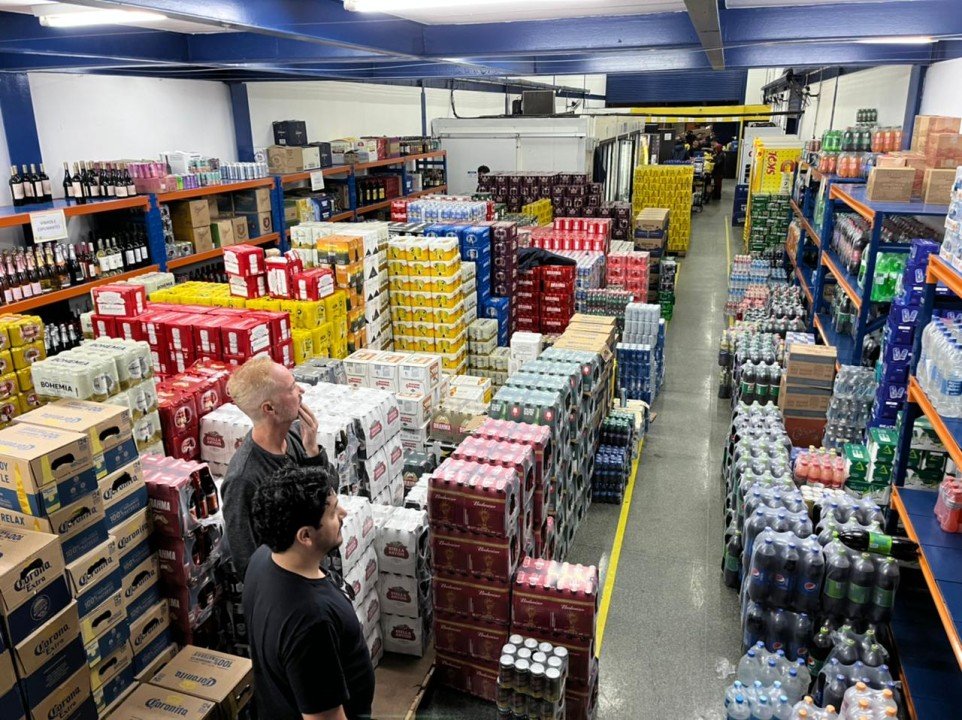
• Expanded radius (serving the West and Central Zone of SP)
• Delivery time from 10am to 5pm
• DS service radius: up to 6km (current average ~4km)
• Receiving orders until 0am
• Using motorbike on operation
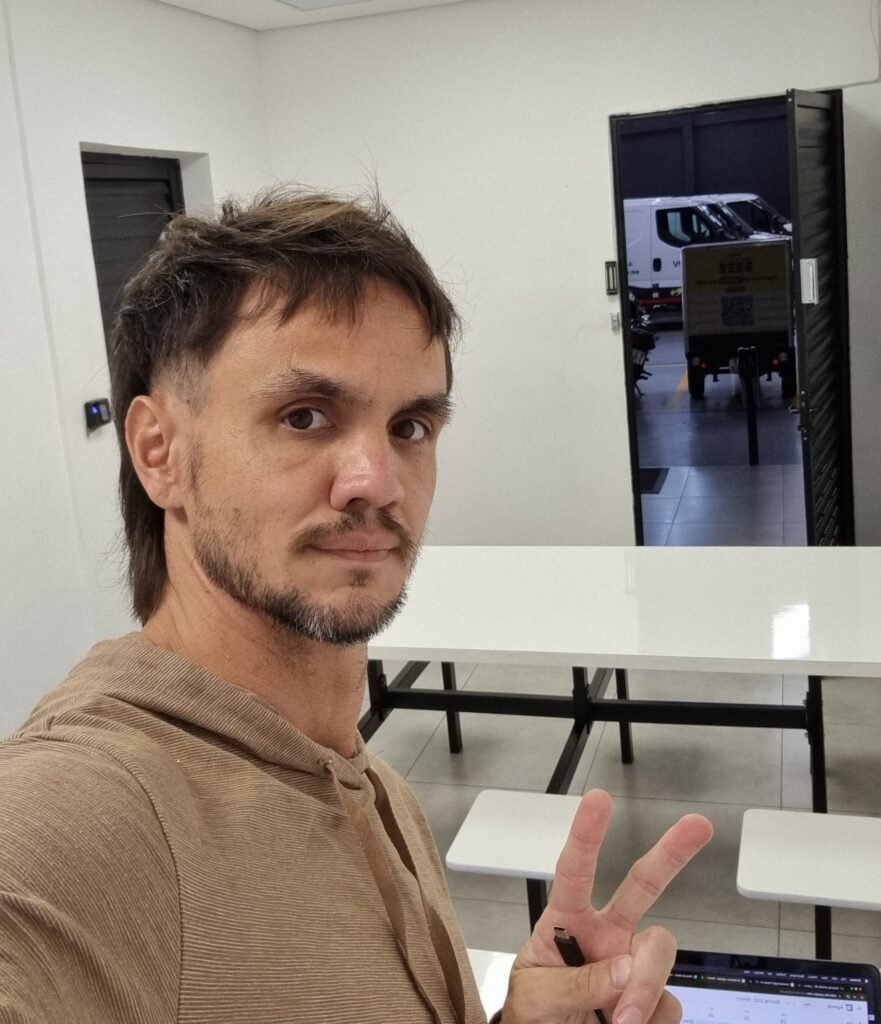
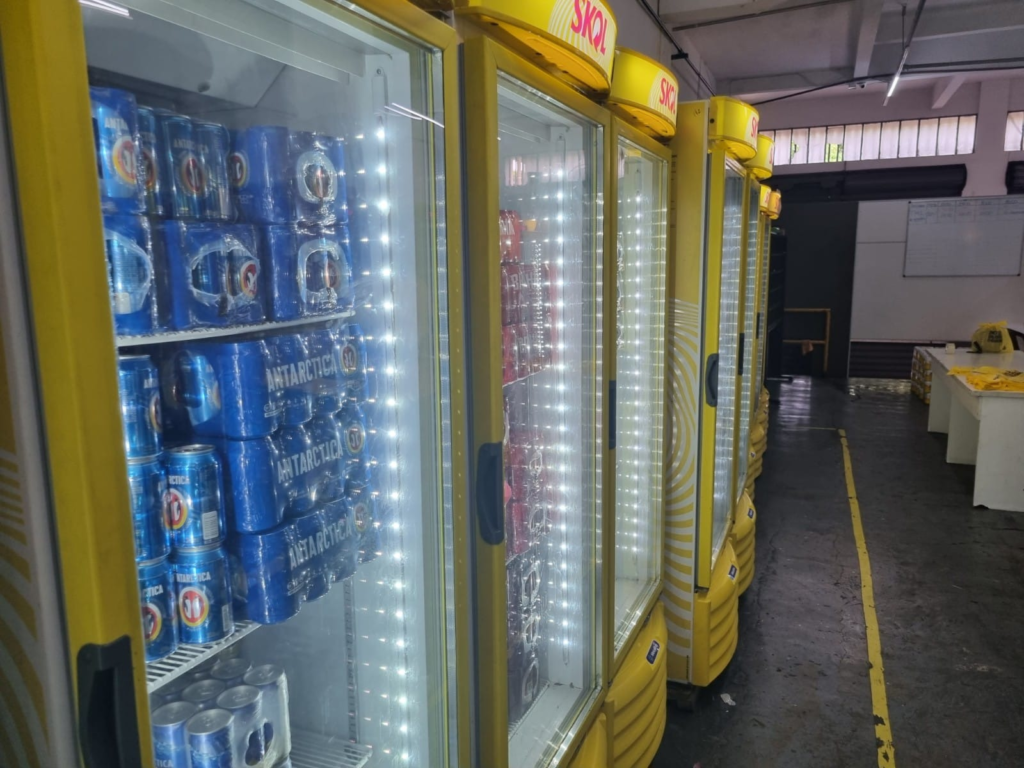
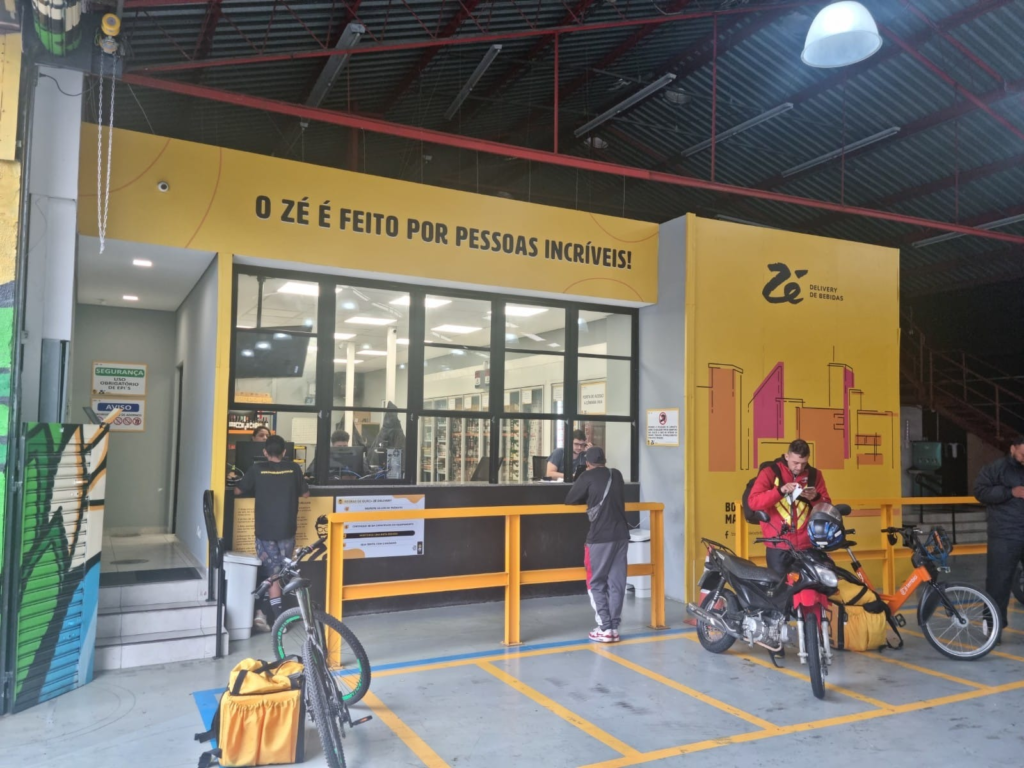
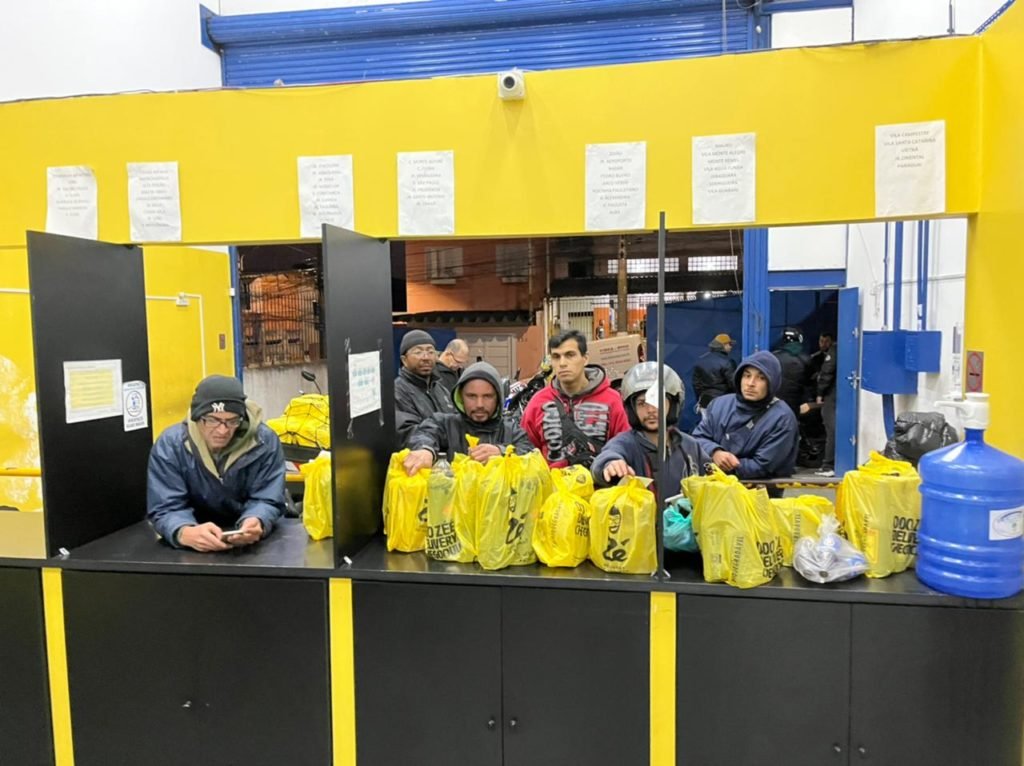
On site at Zé Delivery dark stores.Em campo nas dark stores do Zé Delivery. Cold-first infrastructure that a warm, next-day offer had to fit into.Infraestrutura pensada para o gelado, onde uma oferta em temperatura ambiente, no dia seguinte, precisava caber.
Ideate and Prototyping
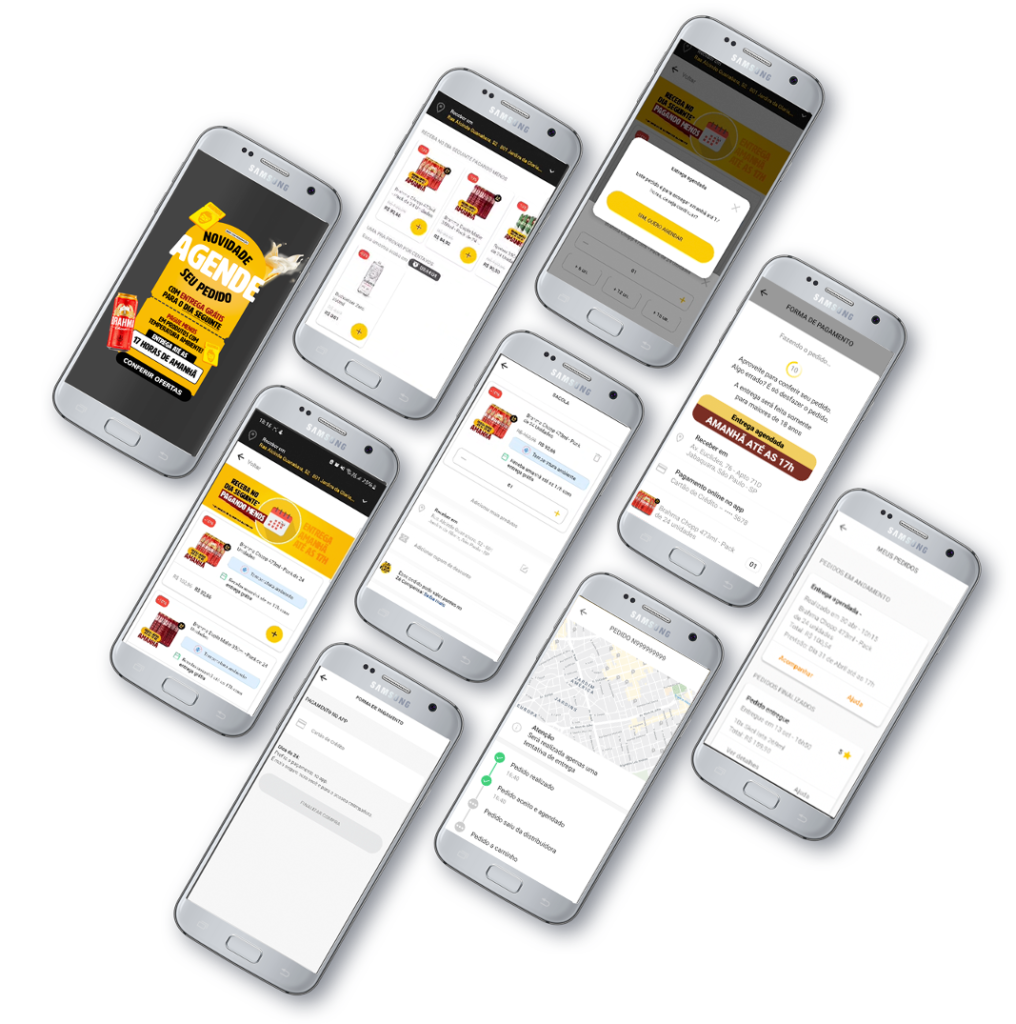
Built as a mask over the existing appConstruído como uma máscara sobre o app atual
To test the hypothesis fast with low dev effort, we didn’t build a new flow. We versioned the current Home: same UI, same code, only the content replaced.Para testar a hipótese rápido e com pouco esforço de desenvolvimento, não construímos um fluxo novo. Versionamos a Home atual: mesma UI, mesmo código, só o conteúdo trocado.
Why it mattered:Por que importou: low dev effort meant more pace, so hypotheses could be tested and versioned in short cycles.pouco esforço de desenvolvimento significou mais ritmo, para testar e versionar hipóteses em ciclos curtos.
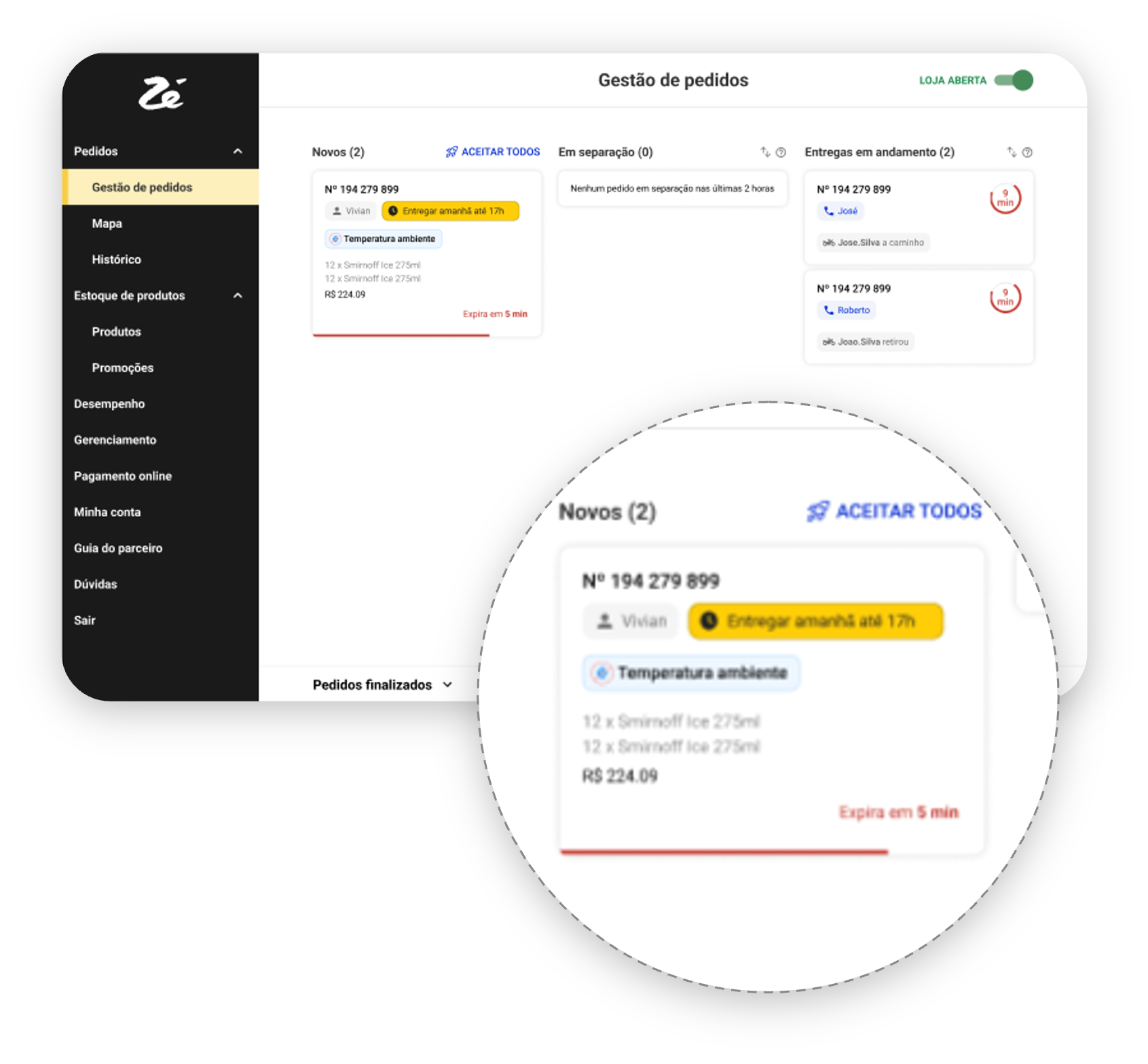
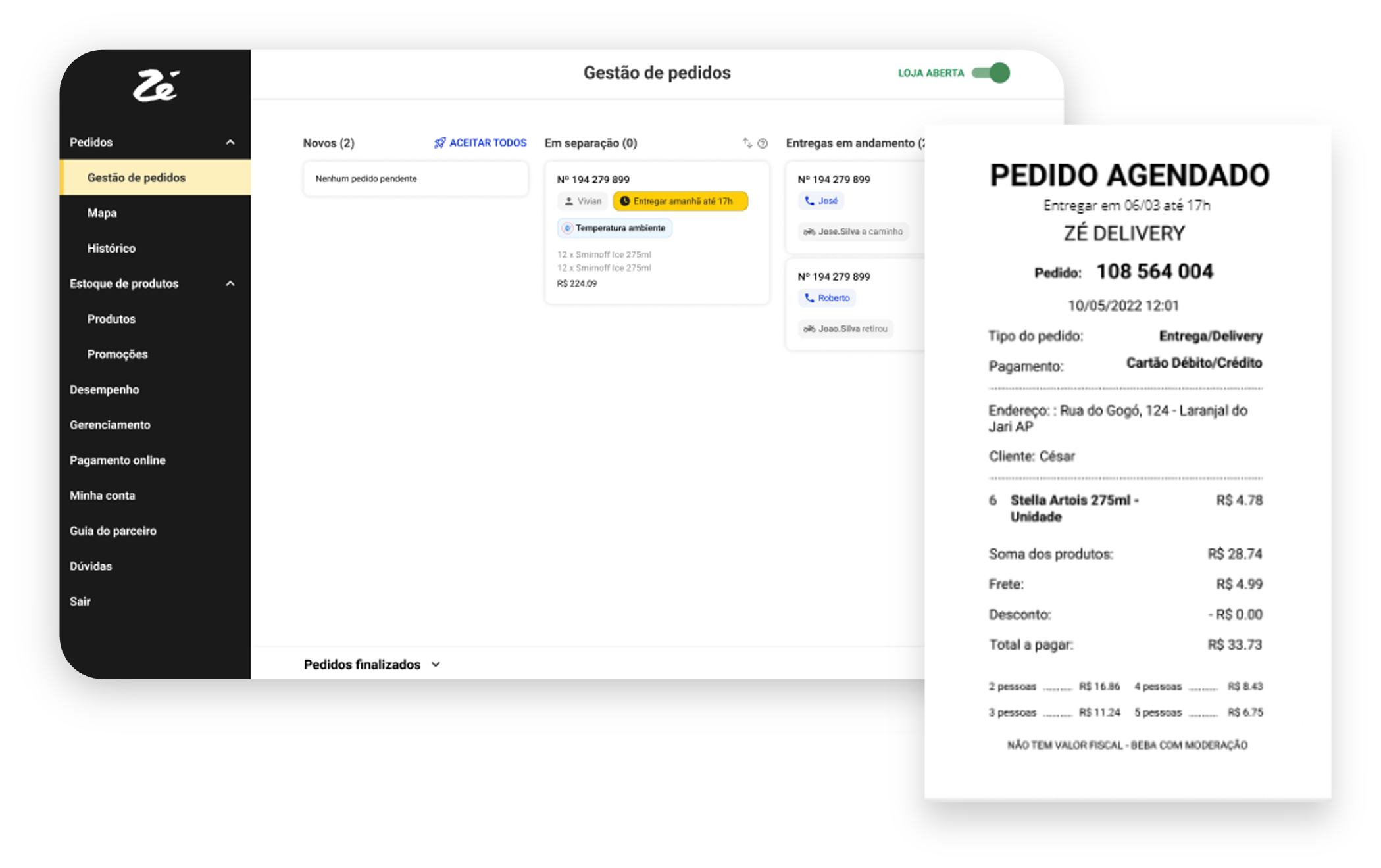
Seller interface, receiving information about the Next Day Delivery with a new component
Outgoing order, printing the information in the delivery invoice to inform the courier and the sellerPedido em rota: as informações saem impressas na nota do pedido, para o entregador e o vendedor
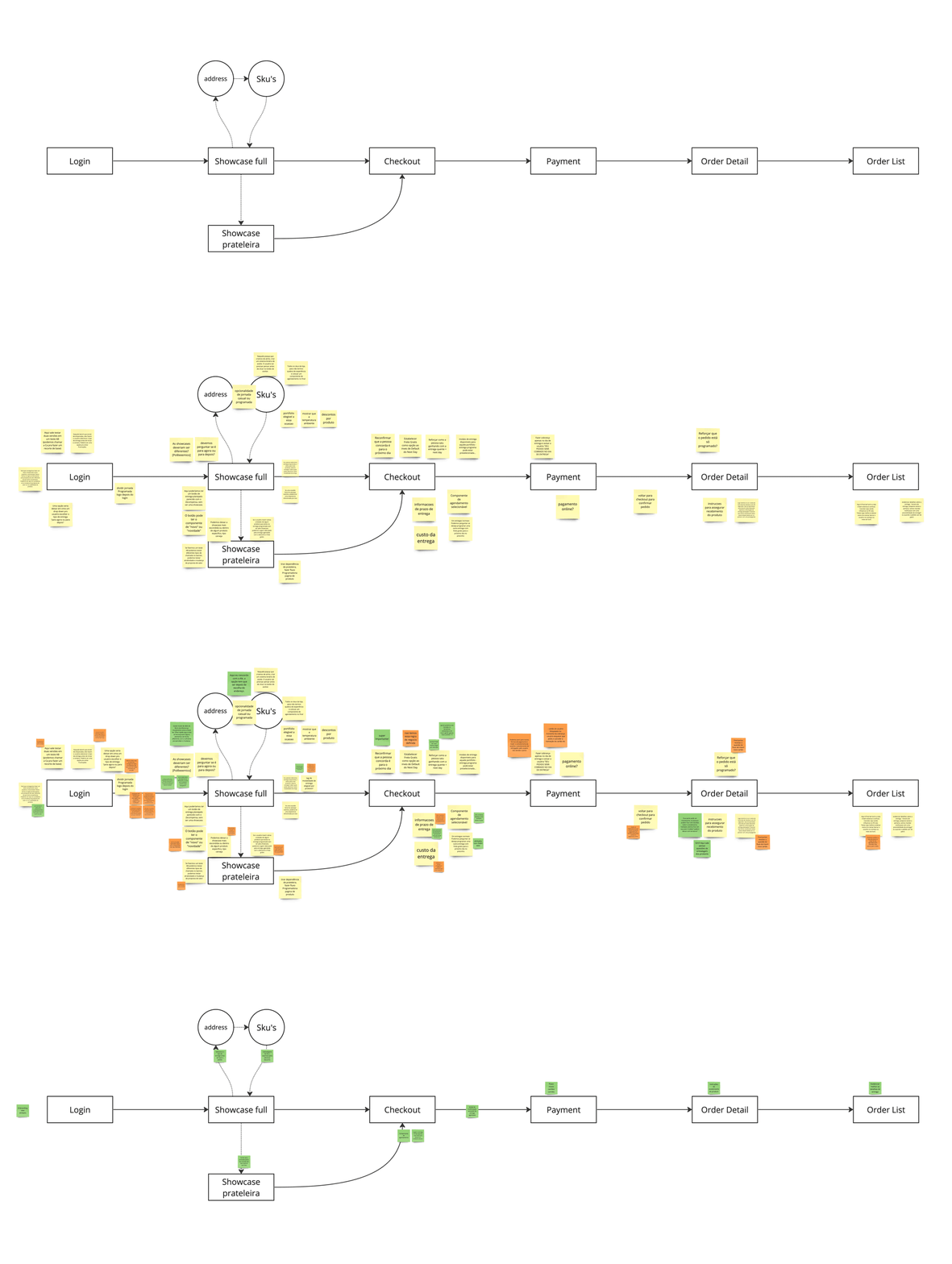
Solution discoveryDescoberta de solução
Diverging: Assisting the operation
• Operational failures
• User behavior
• Area coverage
• Ongoing learnings
Transforming data to insights
• Closing numbers
• Screen recordings
• Quantitative research
• Next Steps
Converging: Scaling the operation
• Preventing cancelled orders
• Avoiding Address mistakes
• No-code and Low-code testing
• Handover new user flow
What went wrong? What went well?
• A considerable increase of Fill Rate metric 📈
• 57% of cancelled order by consumers ❌
• 80% of cancelled order due timing ⏱️
• 14% of cancelled by order expired 👀
05/25 - 06/18
Operation learnings:
• Expired orders made us build a bot to automatize the acceptance;
• Concentration of the test in a single store with a radius of 10KM (centralization);
• A dedicated Van doesn’t correspond to the total volume of orders;
• Stocking warm products is a challenge
___
Consumer learnings
• Consumers did not understand the new purchase occasion (high cancellation rate);
• Occasion needs to be built over time, consumer enters Zé for quick orders (low adherence / number of orders);
• Basket/mix does not differ from the casual occasion.
Screen recordings: watch real users navigating (UXCam)



Sessions recorded: 3.866
Average navigation time from login to checkout: 3 to 5 min*
Most visited sessions: Beers card, Search box and Banners
Behavioral analysis: Users are casual orderers. They look for price advantages, better delivery conditions and the lowest cost. Sessions are short: they open the app already deciding what to buy, and time on the showcase goes to finding cheap products, knowing the order will arrive fast. Our hypothesis: today’s users are loyal to what the app already offers, not to the new value proposition.
Note: cancelled orders had an average wait of 30 min: users expected an immediate delivery and cancelled when it didn’t arrive.
Click paths:
• Main showcase
• Next day Showcase
• Checkout
• Payment
• Order Detail
• Order List
Time to research: investigate the boundaries of the test
Context: We need to understand the impact and visibility of the new feature to users.
Research objectives: Measure the perception of the ‘Schedule’ feature. Understand how many users noticed it and how many considered using it, through quantitative research.
Who I wanted to talk to: New users, recurring users and Zé lovers in São Paulo
Discoverability, not the offer, was the first bottleneck.O primeiro gargalo foi a descoberta do recurso, não a oferta.
Ideating on the cancellation and adoption problem
Considering all the data above, we ran a workshop with the Revenue, Operations and Last Mile teams on two points, order cancellation and adoption, to hypothesize end-to-end solutions along the user flow (from login to receiving the order).
First step: Solutions
Second step: Objections
Third Step: Reforge ideas
Hypothesis A · a new Delivery Method sectionHipótese A · uma nova seção de Modelo de Entrega
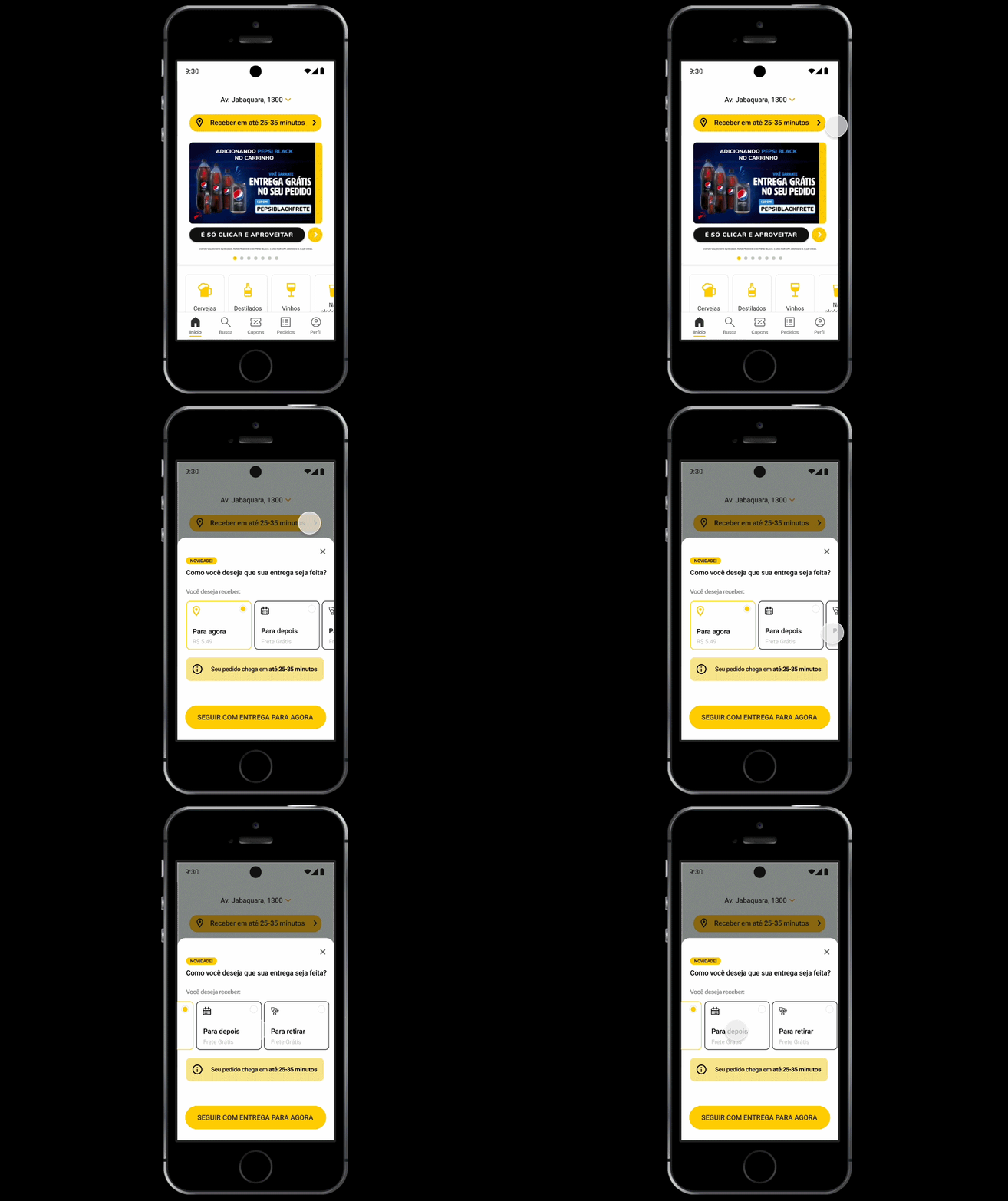
To upsell the feature and according to all benchmark that was made, we decided to propose a new component under the Address selector called Delivery Method, in the beginning of the flow. The idea here is to create a new section, offering users different delivery choices, and making room for new features as we evolve a future vision to Zé Delivery app.
Hypothesis B · tabs with a one-line promiseHipótese B · abas com a promessa em uma linha
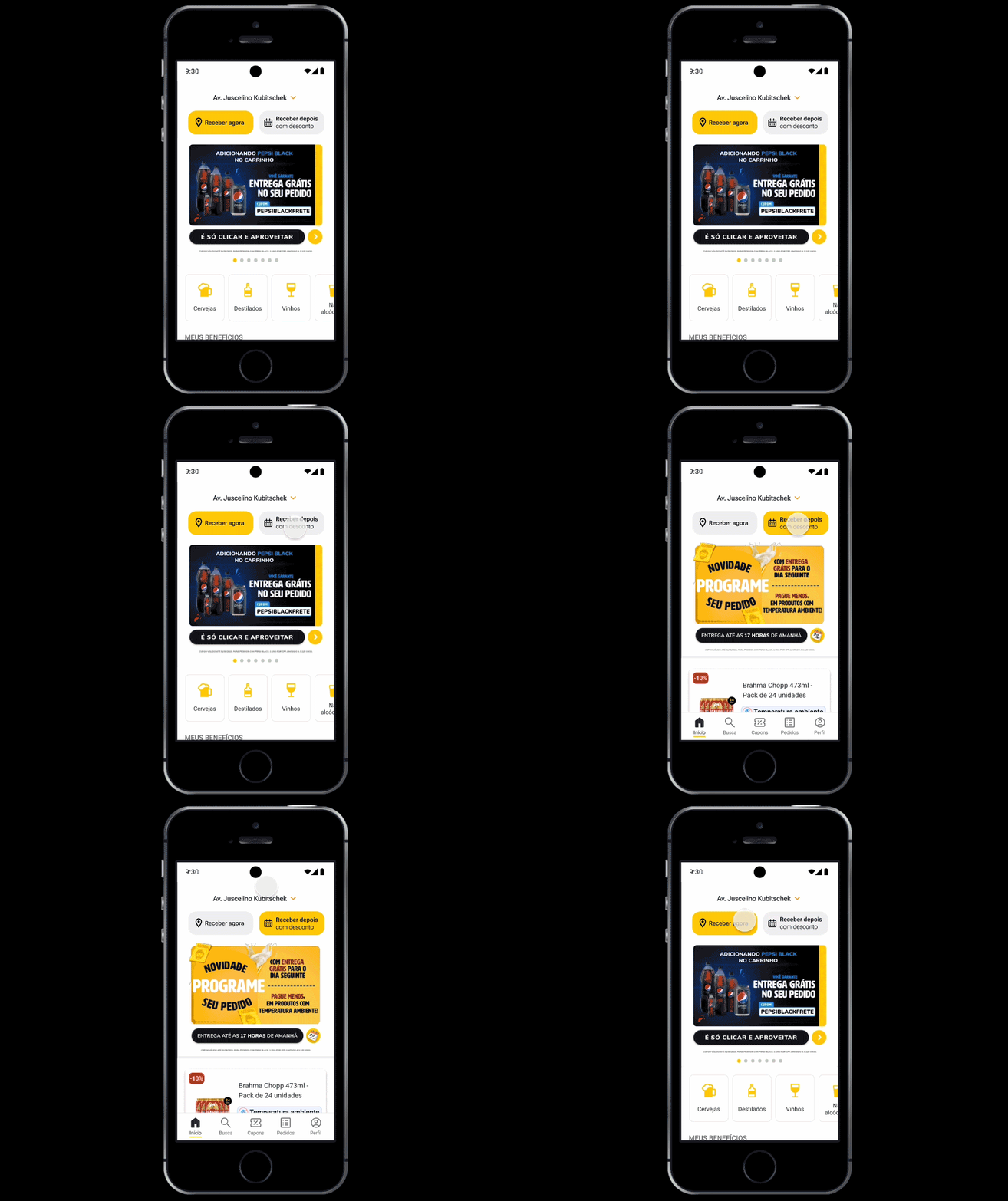
Trying to be more ‘straight to the point‘, we designed hypothesis B keeping the component at the beginning of the flow, but instead of a new area, only a tab component with a supporting information ‘receive tomorrow with discount’. The purpose here is to test a more engaging version, eliminating one step of the flow.
How to decide: No-code and Low-code testingComo decidir: testes no-code e low-code
To roll out the best hypothesis, we developed 2 tests: one is no-code, and another is low-code for quick validation. The first, a usability test, the second, a Fakedoor disguised as a ‘teaser’ – both in the limit of the MVP area (São Paulo State). The point is: we need to move forward with data, statistically saying. Crossing the number, we would ‘roll the dice’ on the best hypothesis.
Non-moderated usability test 📲
Method:
The test launched on August 3 (Thursday) at 12:00 in São Paulo State as an A/B: we split the base and sent one prototype hypothesis to each half. We evaluated:
– Address changing
– Selection of delivery model
– Understanding the value proposition (warm beverage, delivered next day until 5pm)Compreensão da proposta de valor (bebida em temperatura ambiente, entregue no dia seguinte até as 17h)
Who I was talking to:
– Active, recurring, C0, Zé Lovers, Drinkers and Cross* users
Engagement numbers:
Hypothesis A – 2124 accesses, 27% conclusion rate (549 users), 5m 15s average conclusion time
Hypothesis B – 2293 accesses, 30% conclusion rate (651 users), 3m 35s average conclusion time
Results:
907 of 1,587 completed on A vs 795 of 1,578 on B. (A’s average time is skewed by idle sessions, so time is not compared here.)(O tempo médio da A é distorcido por sessões ociosas, por isso não é comparado aqui.)
959 answers on A, 876 on B.
On completion and ease, we see a small difference pointing to Hypothesis A as easier for changing the address.
Hypothesis B always wins on 'Time to complete', but...
700 completions on A vs 725 on B.700 conclusões na A contra 725 na B.
But B always loses on ease: fewer people rated changing the delivery model as easy.
762 answers on A, 760 on B.
And now, the decision-maker data: Hypothesis A is considerably easier to understand when we talk about Value Proposition (warm beverage, delivered next day until 5pm)E agora, o dado decisivo: a hipótese A é bem mais fácil de entender quando falamos da proposta de valor (bebida em temperatura ambiente, entregue no dia seguinte até as 17h)
641 answers on A, 711 on B. Only A made the next-day promise land: 28% vs 10%.Só a A fez a promessa de dia seguinte ser entendida: 28% contra 10%.
Design decisionDecisão de designConclusion: Hypothesis A comes out ahead on user comprehension. There is an assumption that the micro interaction in the component may have helped in this cut, and also an extra step in the flow helped the user to better understand the value proposition.
Fake door (Disguised as teaser) 🆕Fake door (disfarçada de teaser) 🆕
Method:
To fast validate and generate quick learnings, we developed a strategy to fragment the engineering process: instead of producing the whole flow, taking time and effort, we decided to deliver only the first part of it – the Delivery Model component. The objective: implement a fake door, measuring clicks per unique login, and cancellation problems (due address changing).
KPIs:
Order Cancellation (WtW)
Average clicks per unique user
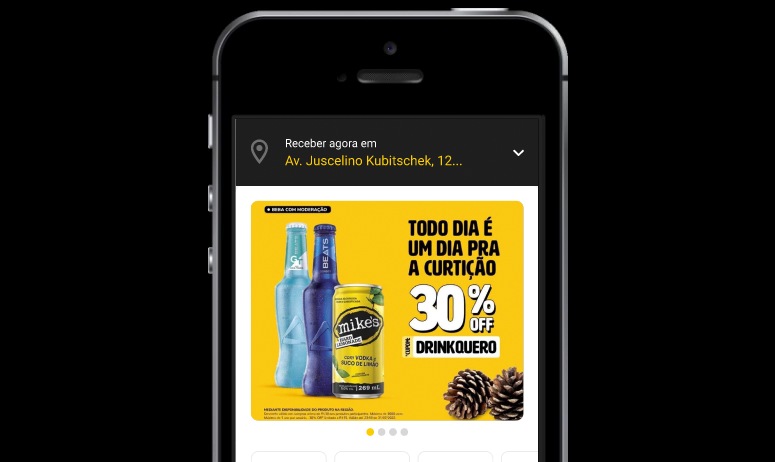
Current top barBarra superior atual
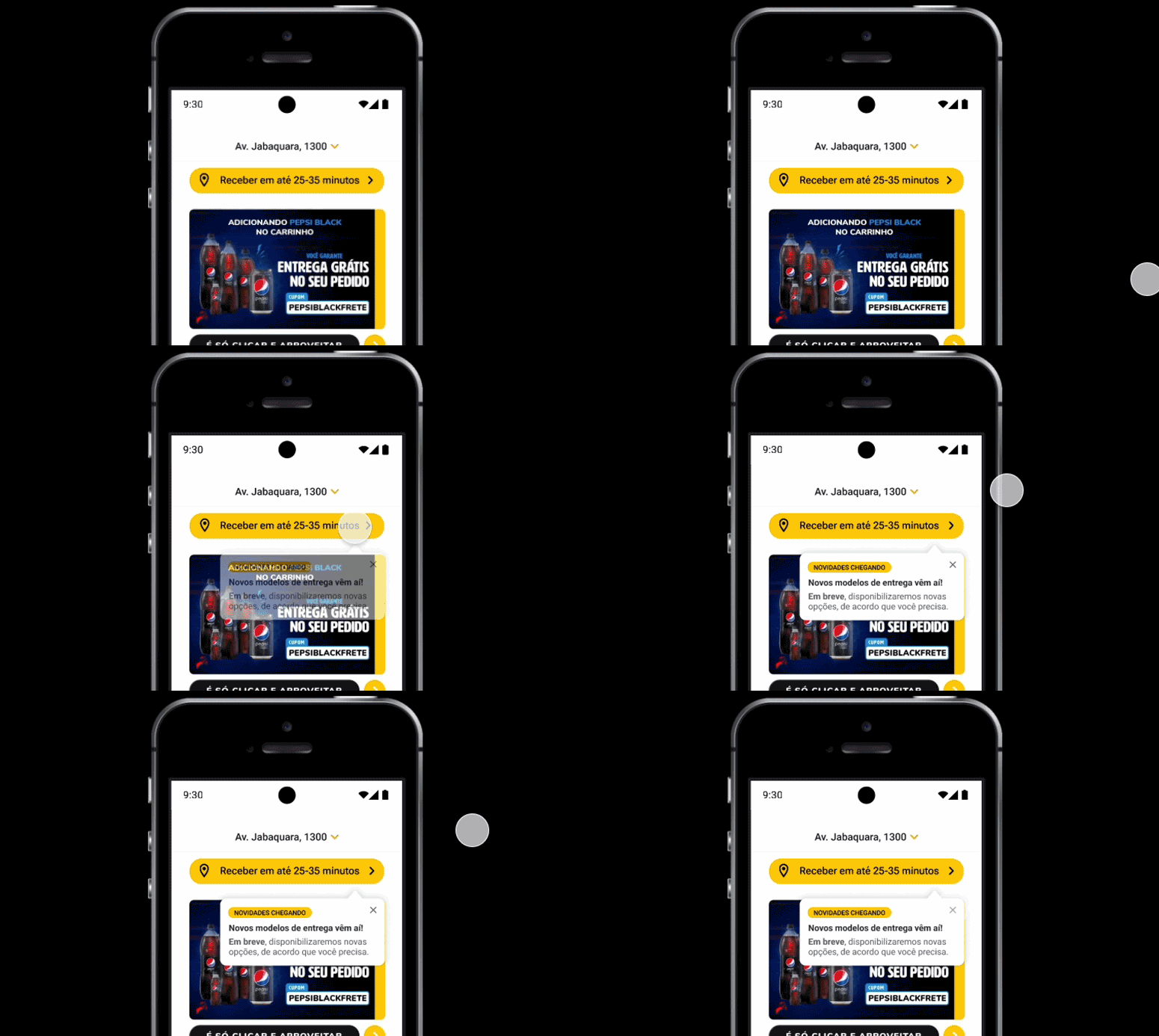
Hypothesis A top barBarra superior · hipótese A
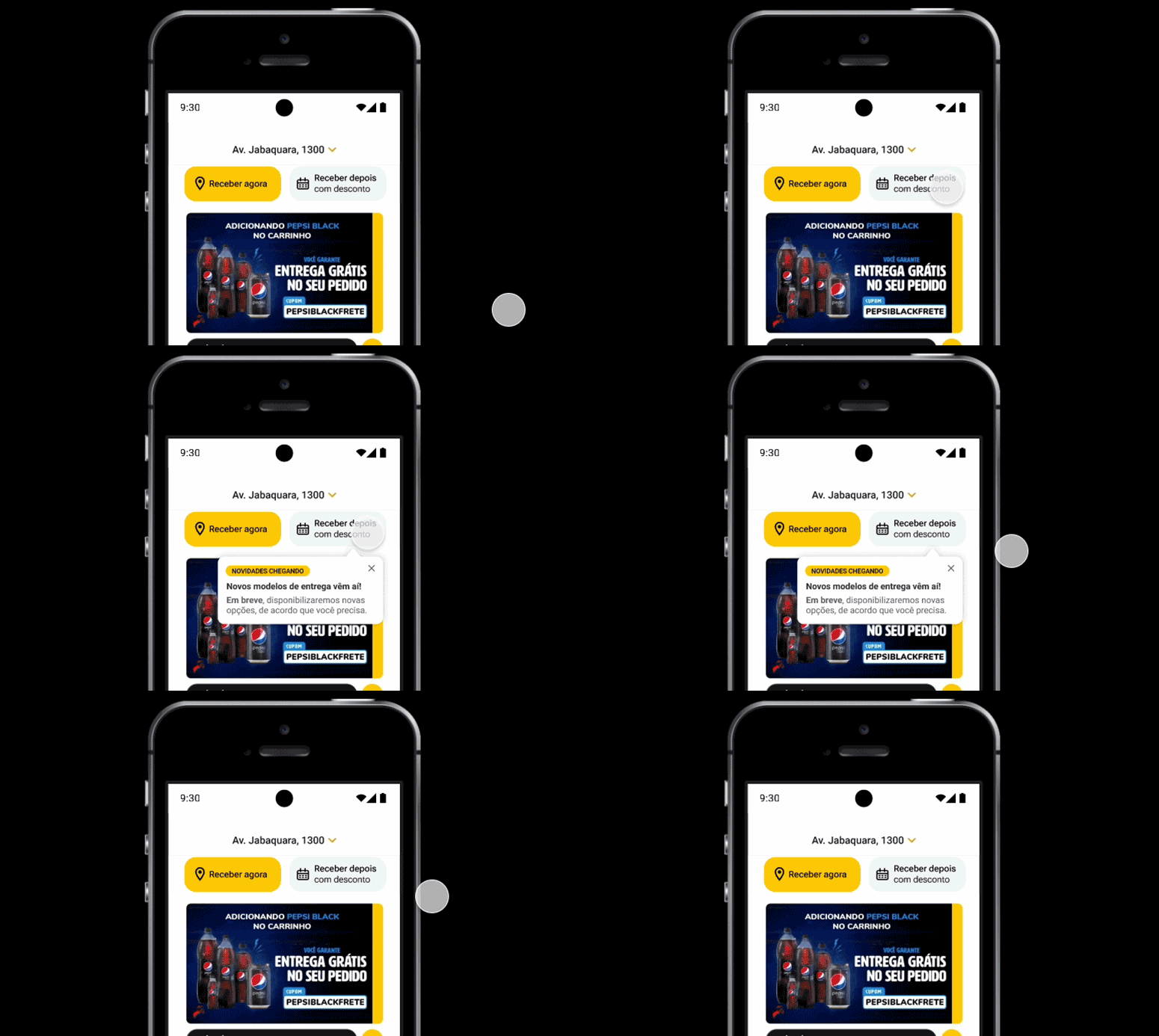
Hypothesis B top barBarra superior · hipótese B
Results and Next Steps
What it changed: we showed stakeholders that scheduled delivery would not grow order volume among today’s users, who come to Zé for cold, fast and cheap. Its real lever is new users: planned-purchase shoppers who buy from marketplaces today. That reframed the initiative from a feature into a new segment.
What I’d do differently: test discoverability (a fake door) before the operational pilot. It would have saved a round of cancelled orders.
O que mudou: mostramos aos stakeholders que a entrega agendada não aumentaria o volume de pedidos dos usuários atuais, que buscam o Zé por bebida gelada, rápida e barata. A verdadeira alavanca são os novos usuários: quem planeja a compra e hoje compra em marketplaces. Isso transformou a iniciativa de uma funcionalidade em um novo segmento.
O que eu faria diferente: testar a descoberta do recurso (uma fake door) antes do piloto operacional. Teria evitado uma rodada de pedidos cancelados.
