Product Manager
Engineering
Operations & CSM
Business Analyst
My role
Senior Product & Service Designer: research, UX/UI, testing and rollout
Date
2023 - 2024
The challenge
Six steps to order a document
Docket automates the search and issuing of legal documents, such as property records and clearance certificates, for companies in agribusiness, real estate and banking. Every operation starts with the order form. It had become the slowest, most abandoned part of the product.
18%drop-off: of 374 users who started an order, 308 confirmedde desistência: de 374 usuários que iniciaram um pedido, 308 confirmaram
12.3%abandoned at step 2, the main exit point
1.8–20.7minutes to create an order among agribusiness clients
2.64Customer Effort Score out of 5 (28 answers)Customer Effort Score, escala de 1 a 5 (28 respostas)
ContextClients order dozens of documents per operation, for many people, companies and properties at once. 23% of orders had 20 or more holders.
ProblemThe form asked for the same address, city and state for every holder, allowed only one document per holder and had no way to save progress.
My roleI led research and design with the PM, Engineering, Operations, CSM and a Business Analyst, from discovery to a phased rollout.Liderei a pesquisa e o design com PM, Engenharia, Operações, CSM e um Business Analyst, do discovery ao rollout em fases.
Before / After
From a 6-step form to 3 steps organized by operation
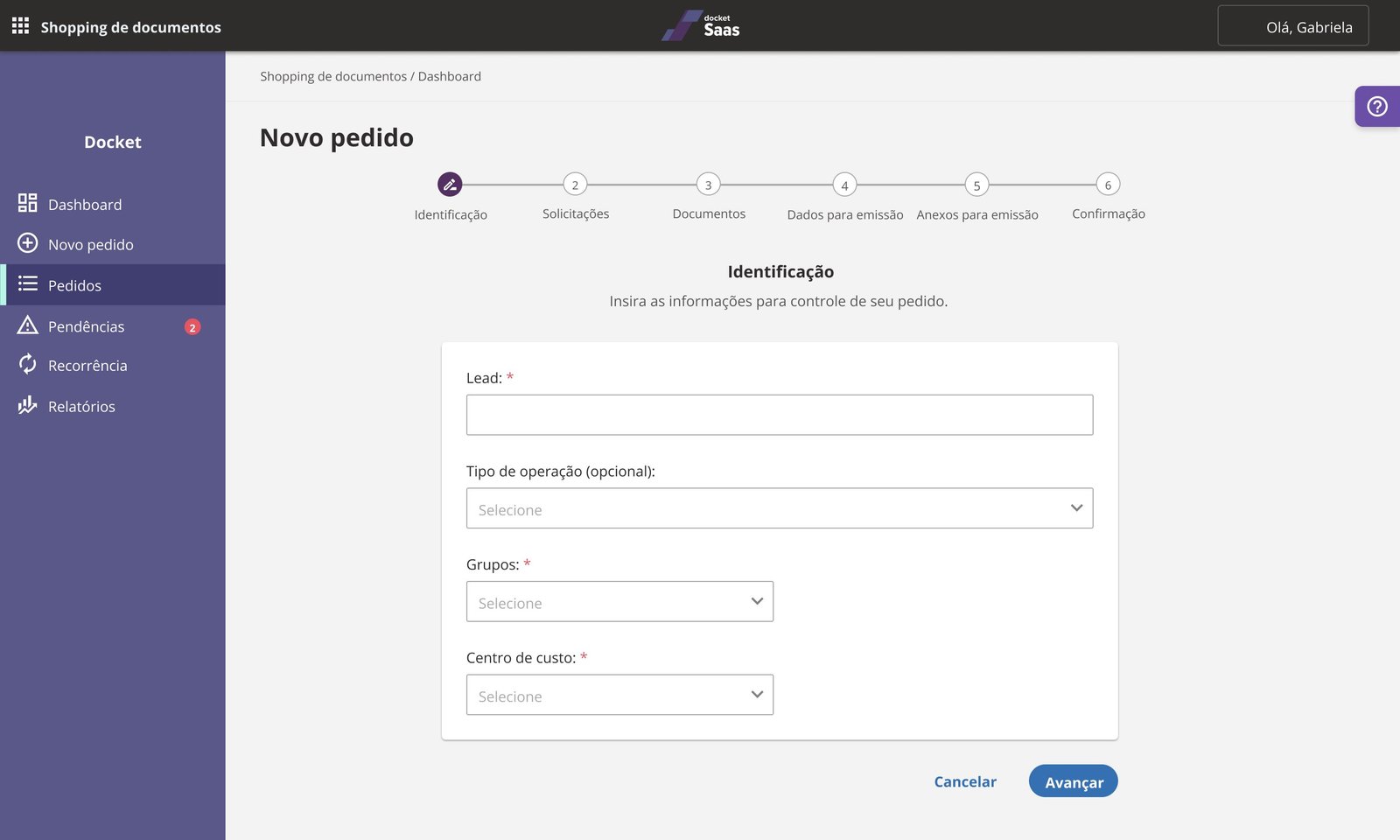
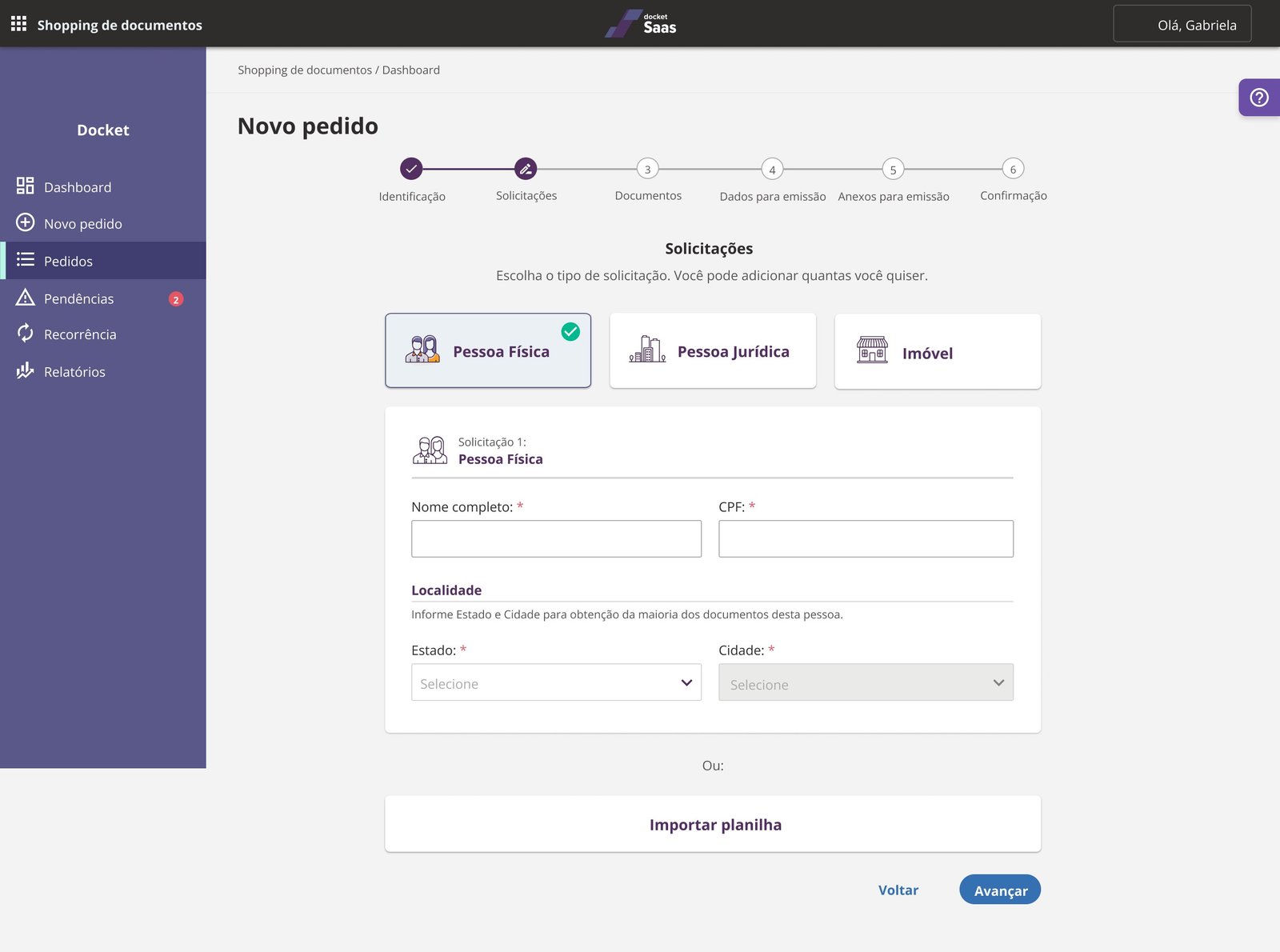
Before · 6 steps
docket.com.br
Identification, requests, documents, issuing data, attachments and confirmation.
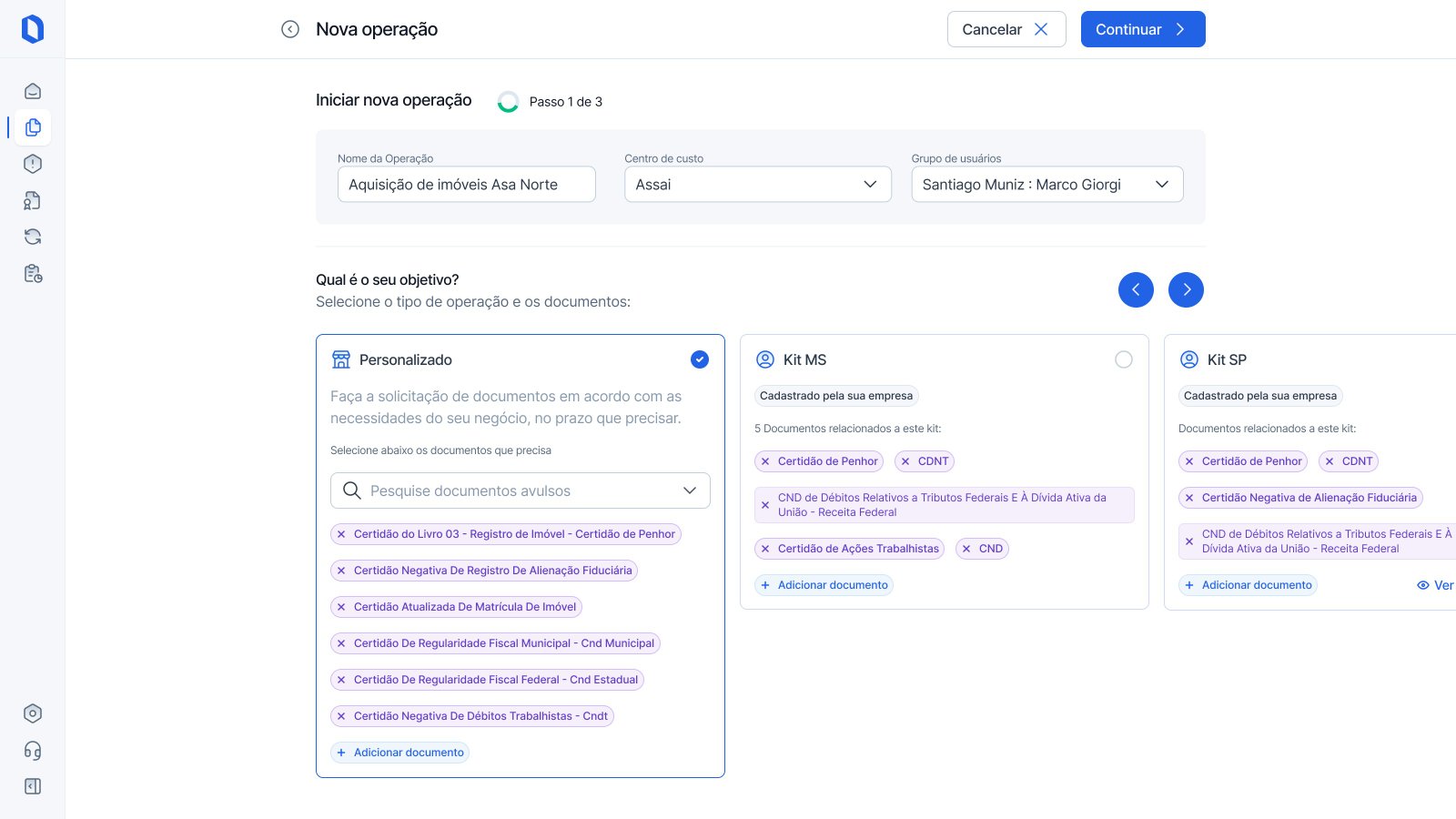
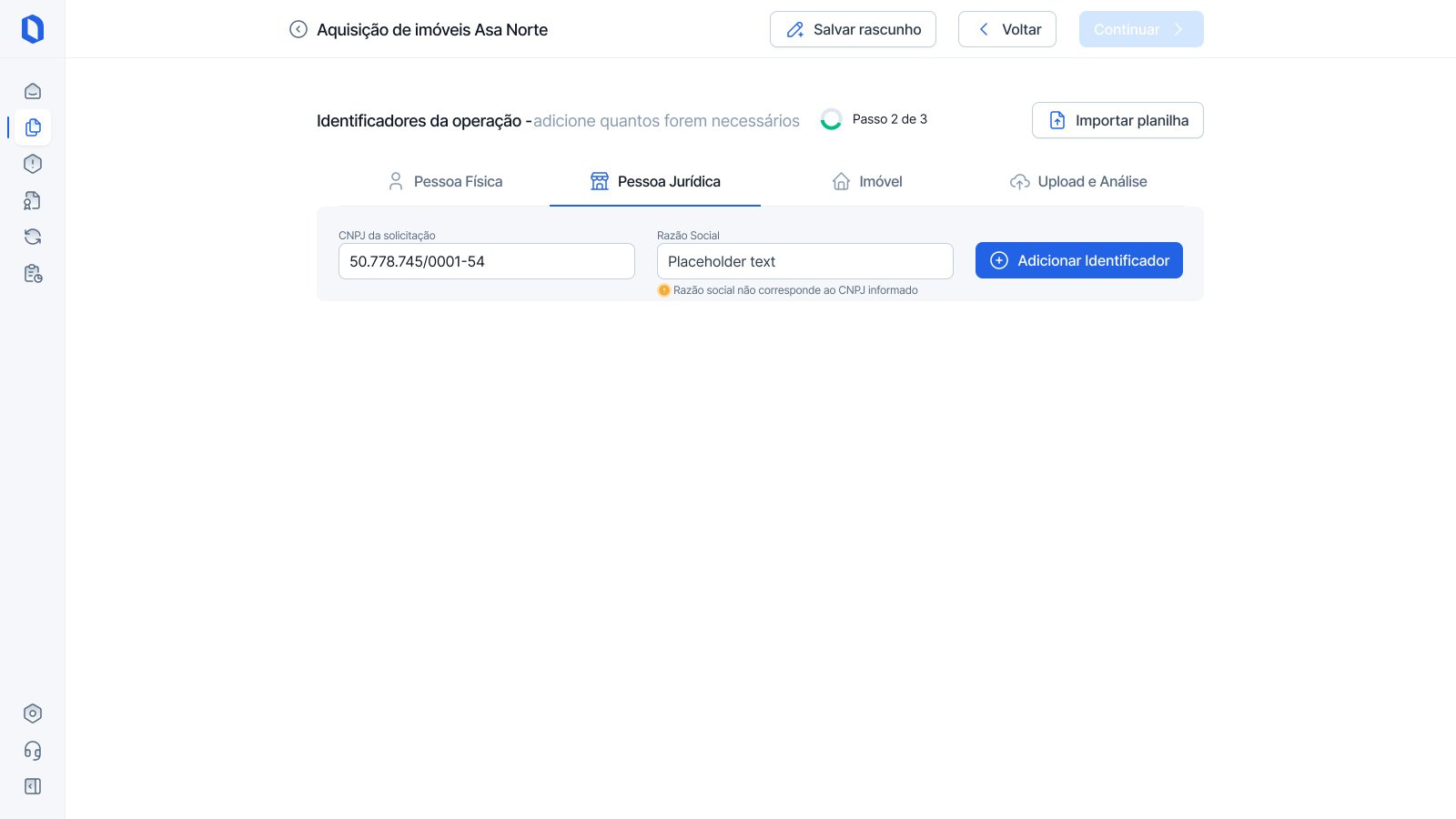
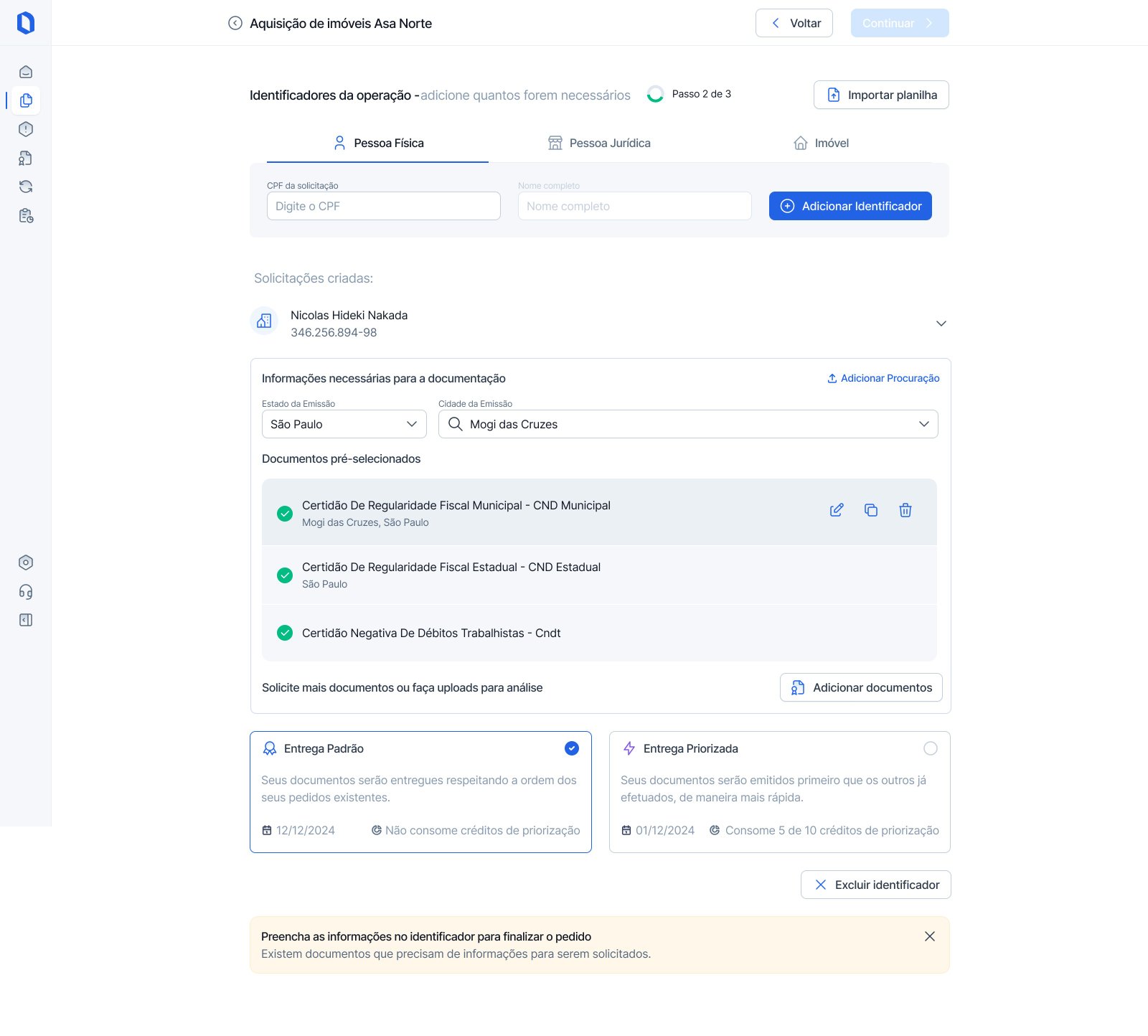
After · 3 steps
docket.com.br
Choose the operation and its document kit, or build a personalized one.
docket.com.br
One holder at a time, repeating location data for each one.Um titular por vez, repetindo os dados de localização para cada um.
docket.com.br
Add people, companies and properties as identifiers, or import a spreadsheet.
01 · Research
Understanding the form through data and people
QualitativeInterviews with 3 Customer Success Managers and a field visit to a client. “Instead of saving time, the process adds time.”“Em vez de economizar tempo, o processo adiciona tempo.”
Deep dataWith a Business Analyst: time per client, per document and per role. Newer clients and less experienced users took far longer; legal analysts were the fastest.
Effort surveyA Customer Effort Score survey inside the product (28 answers, then 69 in a second round) with open questions about what was hard.
What we saw
What it meant
Hypothesis
Most orders start from the same document kit
Users re-selected the same documents every time
Organize kits by operation; only add or remove
Same address, city and state asked per holder
Repeated input and errors
Collect common data once, with dynamic fields
1 document per holder, average of 6 orders per user
The same order rebuilt again and againO mesmo pedido refeito várias vezes
Duplicate documents inside an identifier
53% order without being able to save53% pedem sem poder salvar o progresso
Users restart when information is missing
Save drafts and come back laterSalvar rascunhos e voltar depois
02 · The new flow
Three steps, built around operations
docket.com.br
Step 2 · Documents per identifierPre-selected documents from the kit, shared data filled once, duplicate or remove documents, and standard or priority delivery.
docket.com.br
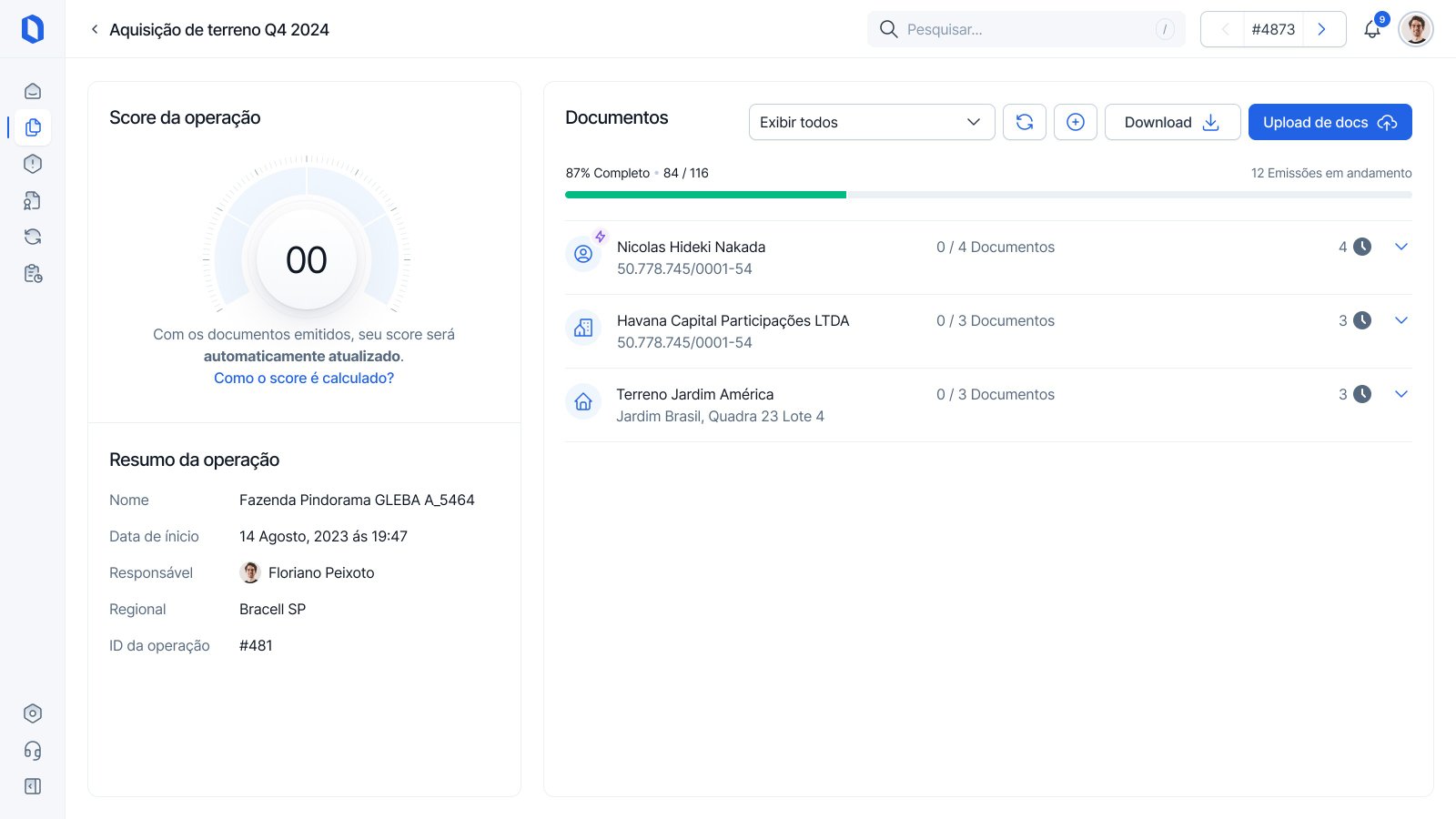
Step 3 · Operation summaryProgress of every document, grouped by person, company and property.
03 · Validation
Tested with operations teams and clients
30screens prototyped and tested
240minutes of moderated sessionsminutos de sessões moderadas
5iterated versions
20improvements along the way
4.5/5average ease score across tasks
7 of 8clients valued choosing the operation type first, so every use case had to be mapped, plus a neutral, customizable kit.
8 of 8struggled to know where to click after searching for a document, so an explicit “Add” action was added.
7 of 8saw duplicating requests as positive, so a base model now drives every new request.
Client tests with Dubeux, Minerva Foods and Bracell, plus critiques with Product, Engineering and Design.
04 · Rollout
Released in waves, with the teams ready
3clients · Release 1
10clients · Release 2
25clients · Release 3
45clients · Release 4
100%of the base · Release 5
EnablementTraining and materials for CSM, support and operations, a kickoff with sales, and client kits reconfigured as operations before each wave.
Measured byCompletion time, conversion rate and CES, plus pending items per document and documents per order, by segment, client and role.
What changedFrom 6 steps to 3; kits organized by operation; a personalized kit; all holder and issuing data on a single page; a new summary.
05 · Document analysis
Making AI-extracted data trustworthy
In parallel, I designed the reading of property records (matrículas): the platform extracts owners, liens, areas and transactions from scanned documents. The challenge was scale with trust, because extraction accuracy would never be 100%.
docket.com.br
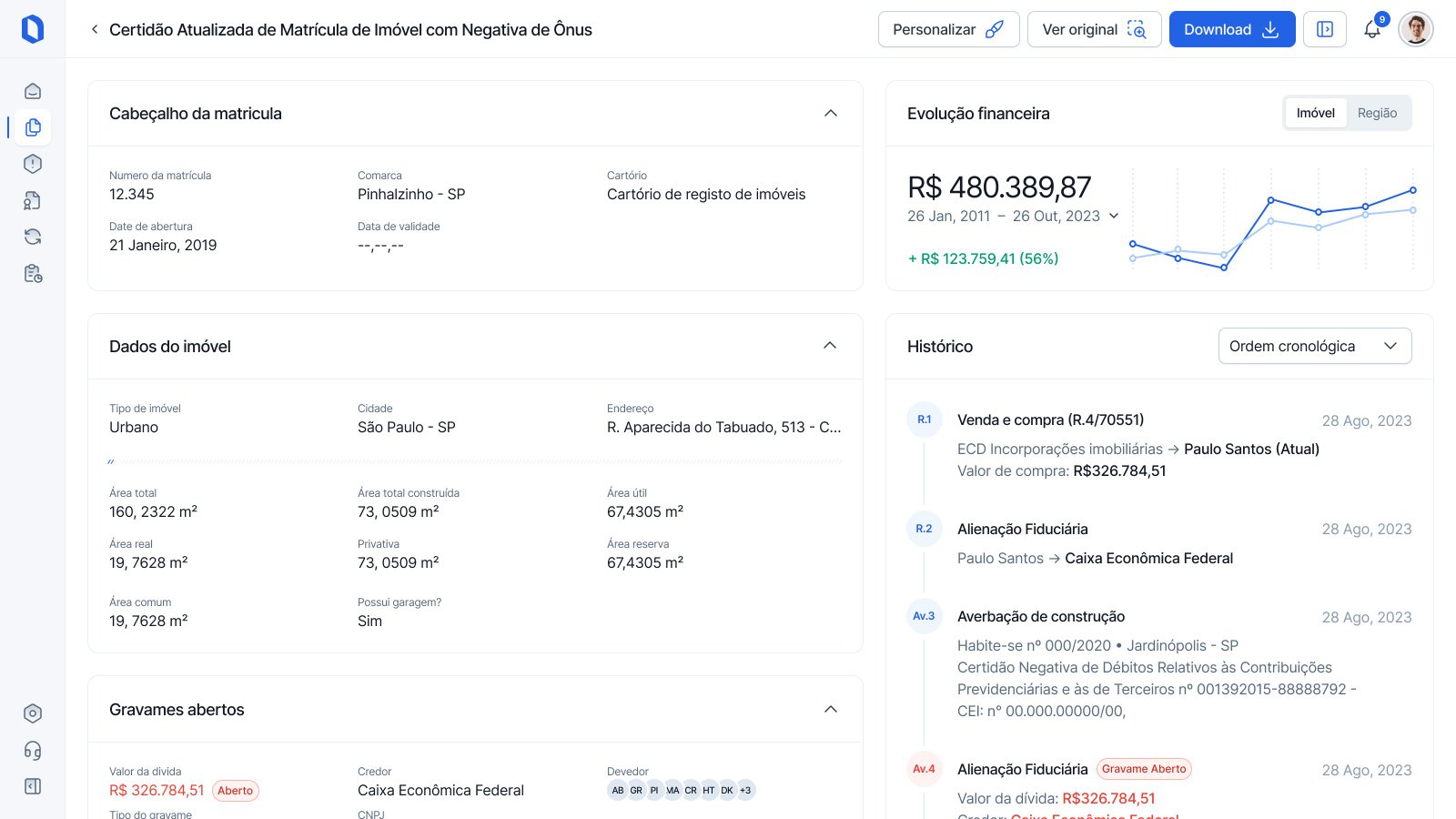
Property record analysisExtracted data side by side with financial evolution and the full history of transactions and liens.
82%open the original document alongside the extractionabrem o documento original junto com a extração
78%accuracy on the record number, up 48 p.p.de acurácia no número da matrícula, +48 p.p.
87→100%accuracy on the rural property ID (NIRF)
−50%processing time per record
docket.com.br
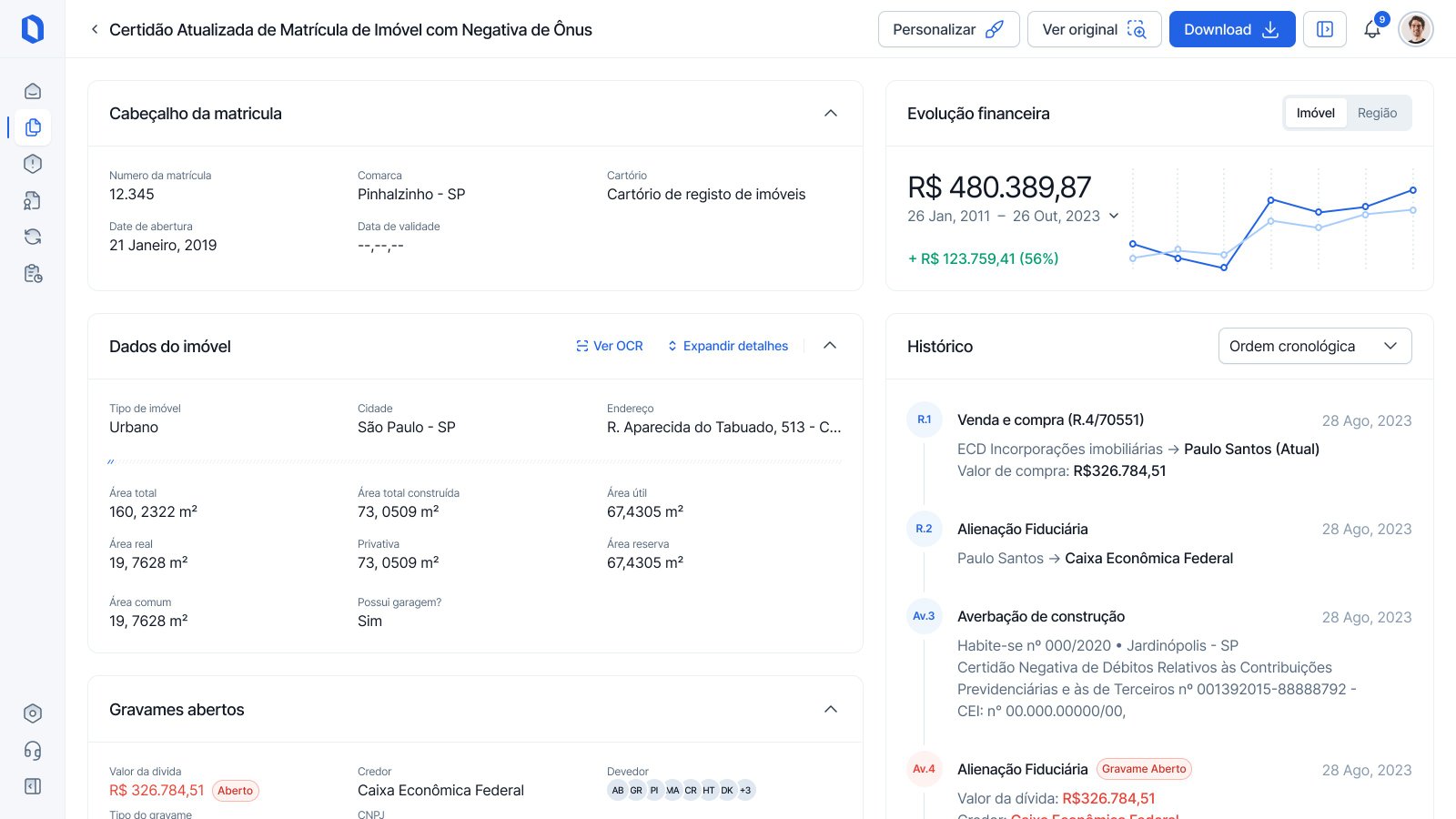
Verify at a glanceHovering a section reveals “View OCR” and “Expand details”, so users can check the source text in one click.
docket.com.br
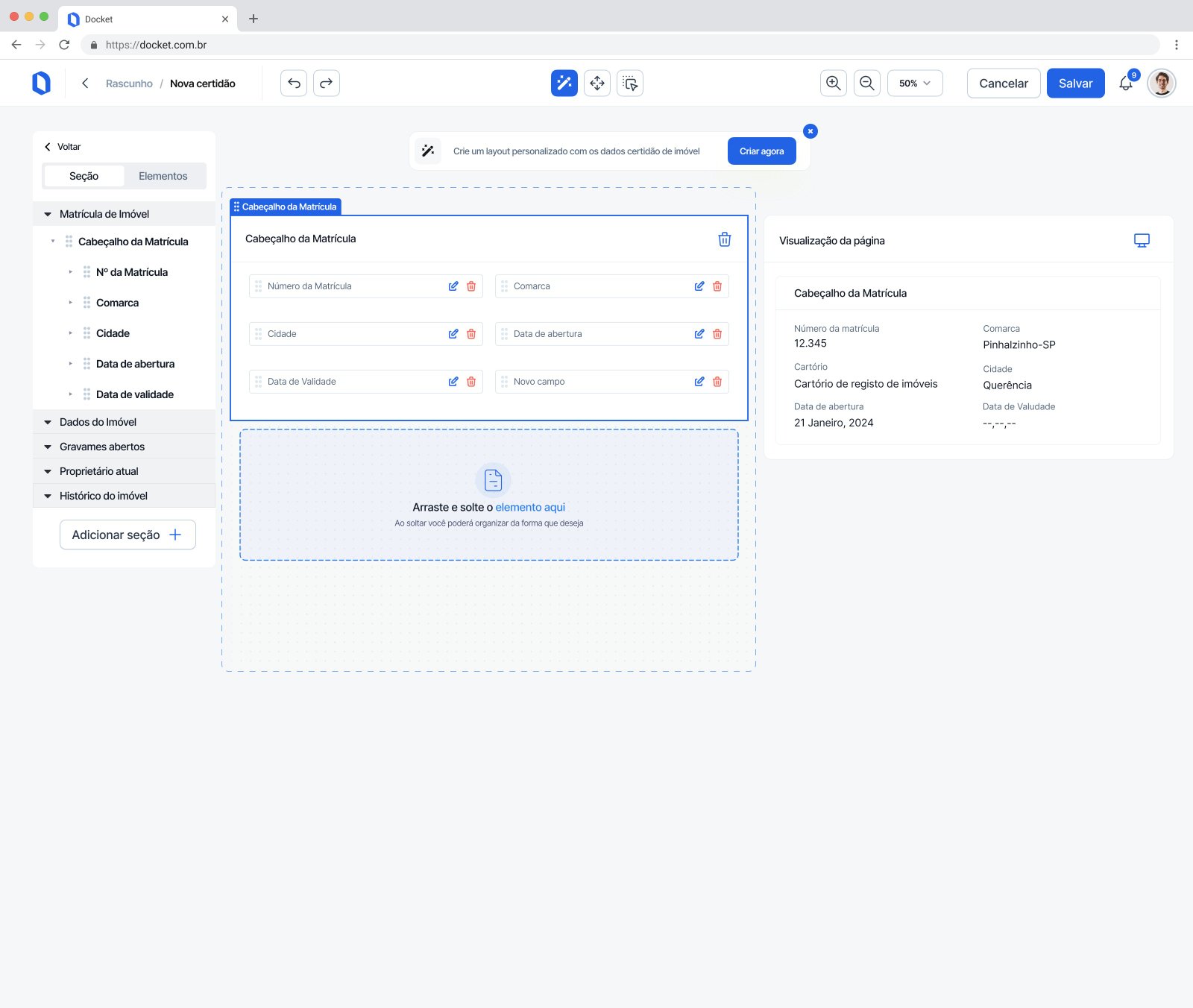
PersonalizationClients choose, edit and reorder the fields they need, by drag and drop.
Listening loopRecurring feedback from clients like Cargill, Suzano, Coopercitrus and C. Vale was logged, prioritized per quarter and answered in follow-up sessions.
EvidenceBlank fields made users feel the extraction was weak, and most of them verified data against the source.
DecisionShow where each value comes from, and let clients personalize, edit and order the data they consume.