Services
Platform
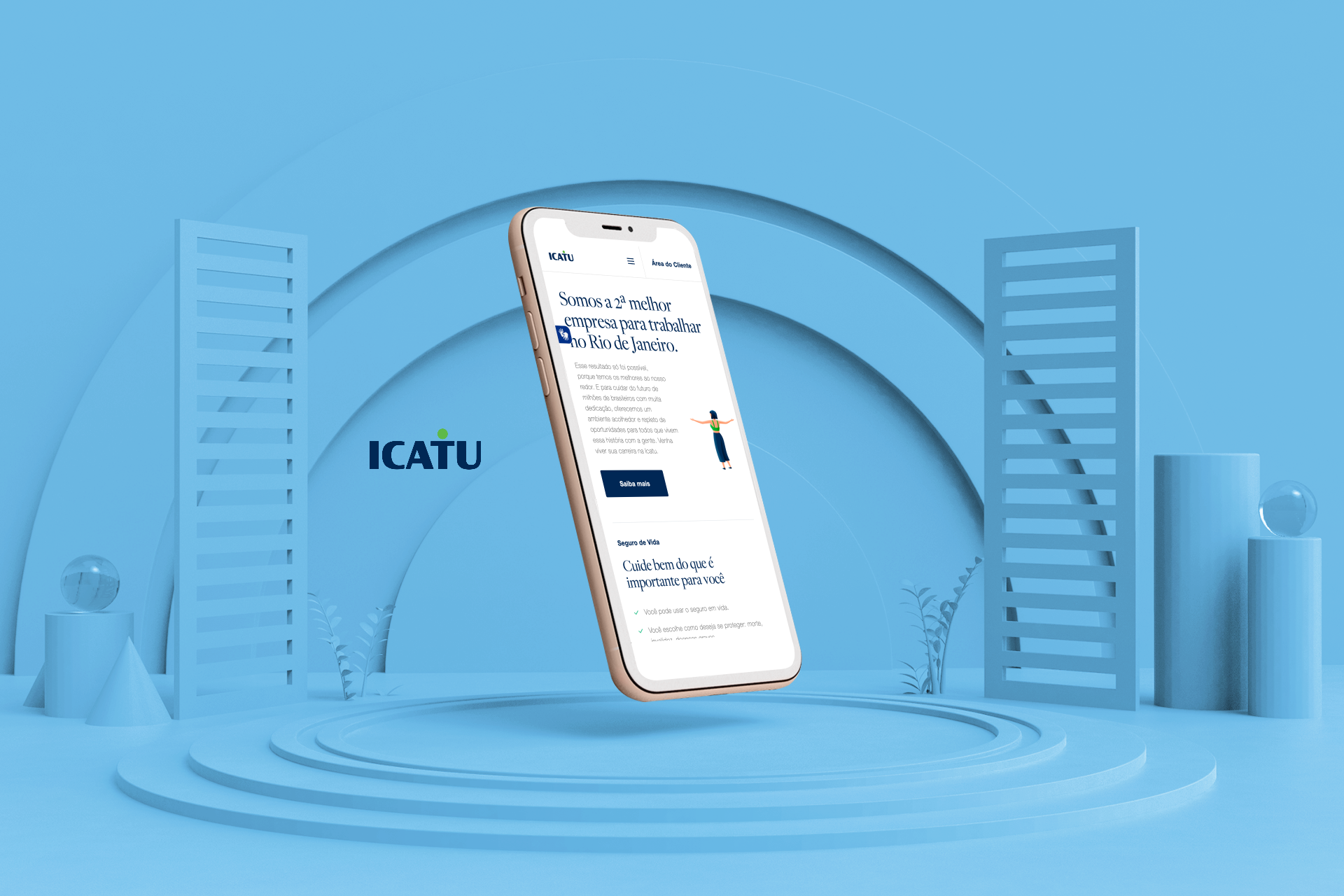
Icatu Seguros is today the largest independent insurance company in Brazil, specialized in selling products through partnerships.
Managing third-party assets and resources that exceed the sum of R$23 billion, they are at the top of the most important national financial rankings. This ammount is operated basically with a tool called Services Platforms, born on 2007.
Our goal was identify the points of improvement that the new platform should contain, considering the three business fronts: Life Insurance, Private Pension and Capitalization
Diverging process
Internal Benchmark
• Client material deep dive
• Tools access
• System exploration
• Technology survey
• Stakeholders interview
• Team Interview
• How it works
External Benchmark
• Client material Debriefing
• Onboarding of small and large partners
• Competitive Benchmark
• User interview
Indicator's analysis
• Data tools research: GA, Dynatrace and Hotjar
• User testing
• Review results
Vision Statement
• Service Blueprint
• Value proposition
• Business analysis and validation
• Team and Stakeholders interviews
Modeling a service Blueprint for each 3 big areas of Icatu ecosystem:
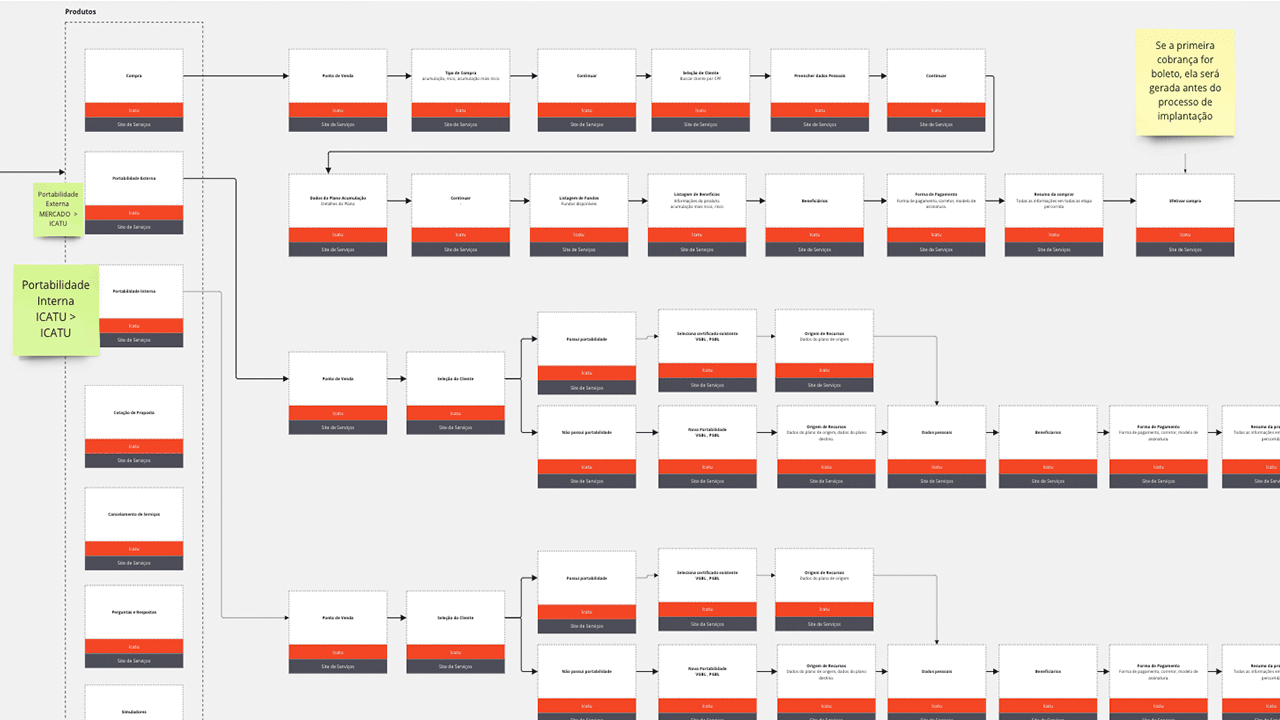
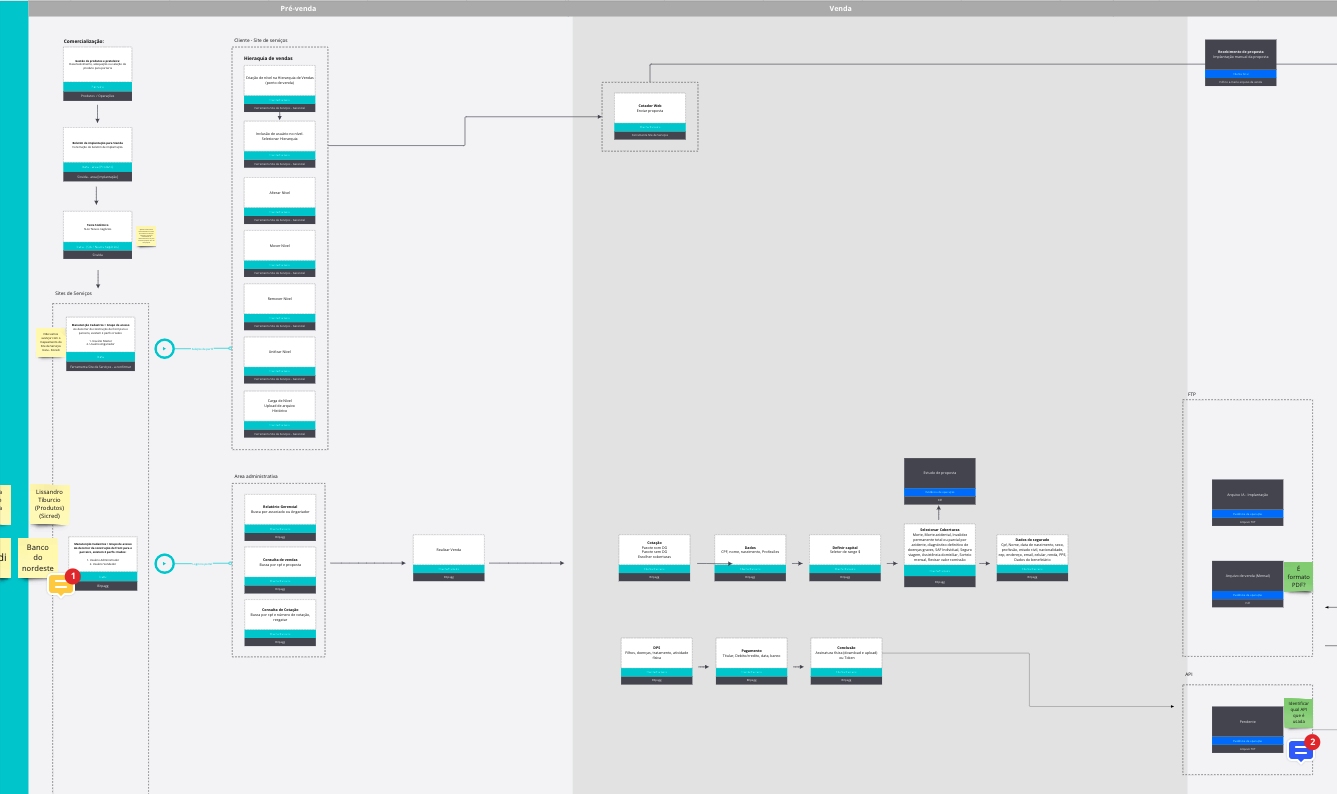
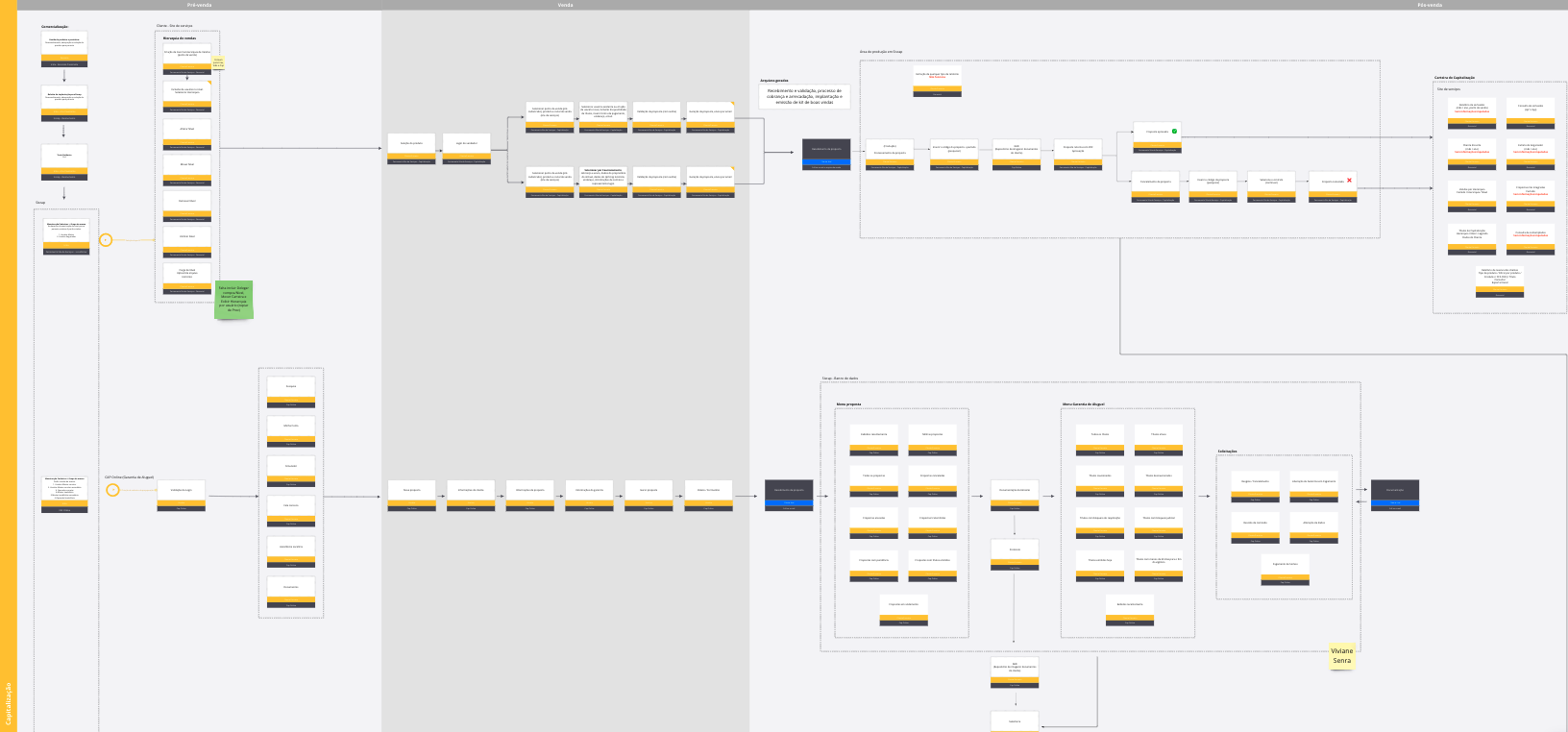
Developing products roadmaps gave us a clear view of how the ecosystem of each area works, and how they relates to themselves.
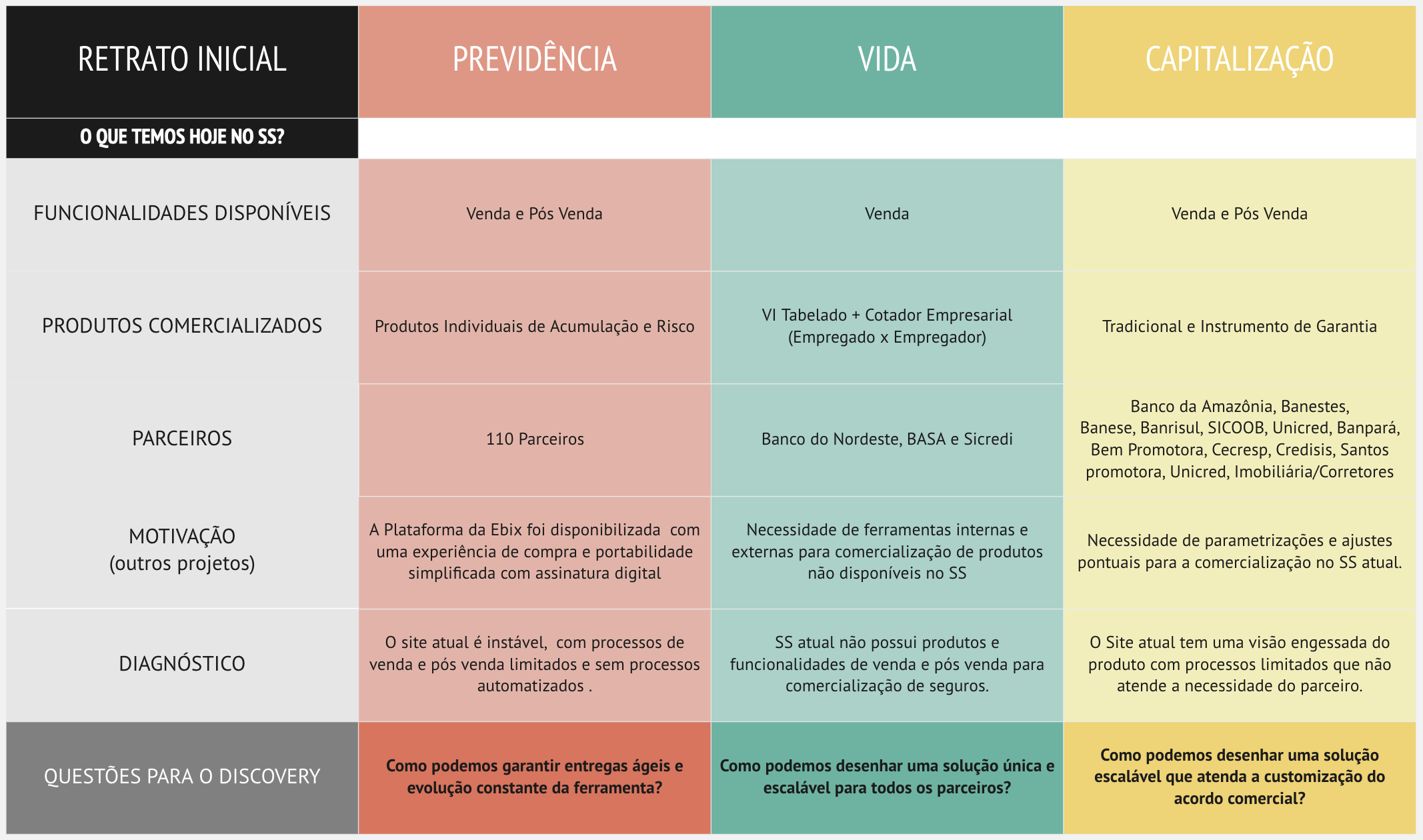
Problems outlined:
🕰 Outdated system – The system was developed in 2007 and the last update was carried out in 2013.
🐢 Frontend Construction – Today, the expected SLA lasts an average of 45 days for production, causing a bottleneck and even anxiety in the partner.
🙇🏽 Unique Solution – Today, the expected SLA lasts an average of 45 days for production, causing a bottleneck and even anxiety in the partner.
➿ Large volume of API’s for systems – To meet the partner’s needs, specific API’s are created and integrated within the system, generating limitations to create a unified solution.
✍🏼 Use of pdf’s for contract – There is no digital solution for a contract, having to download the document and upload it manually into the system, being only PDF the accepted format.
💬 After-Sales System – Currently, Icatu does not have an After Sales system that helps to better relate to its end customer.
😵💫 No standardization – Each front has specific features without standardization, which makes it difficult to create a single solution to meet the three fronts.
❌ Processes without electronic signature – Digital Signature is a differential for the business model that Icatu offers and its absence implies in the facilitation of sales processes.
📋 Management reports – Management reports are one of the biggest pains for system users, as they need to have an overview of the customer with relevant information and that they can extract data from different formats such as Excel.
Converging process
Proto Personas
• Hotjar questionary
• Data gathering
• Words Cloud
• Relevant answers
• Personas cards
Wireframing
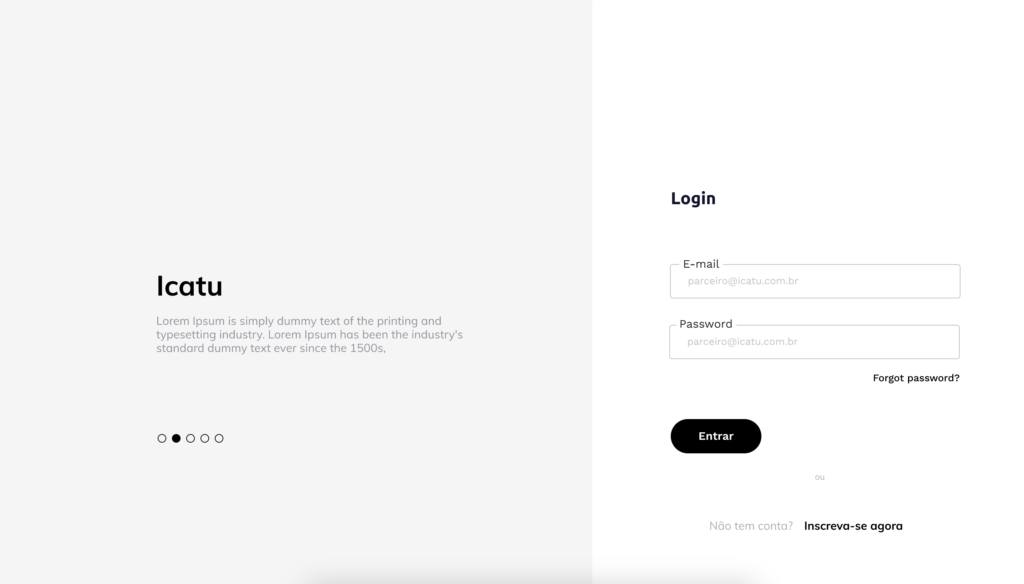
• Unique login screen
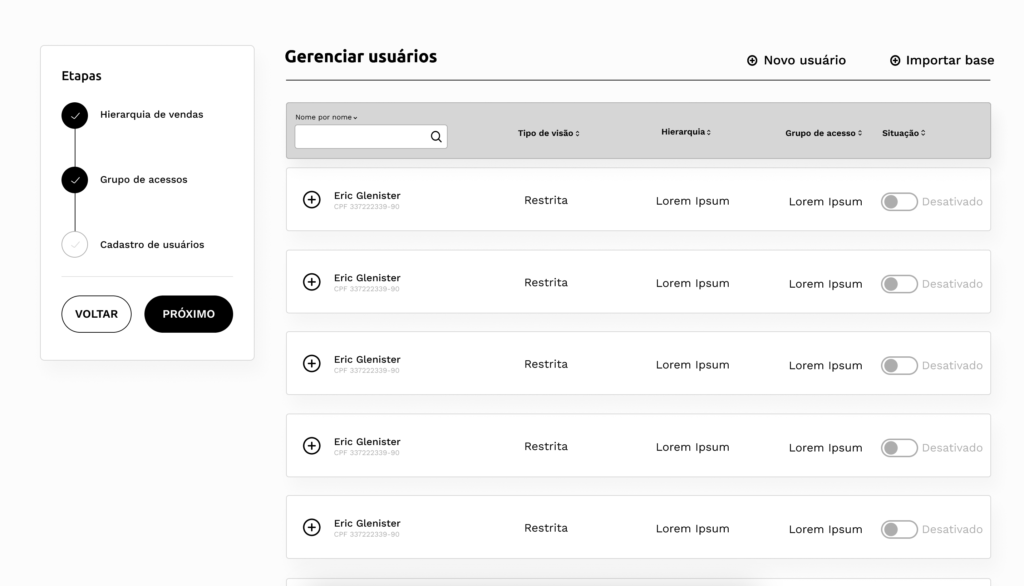
• Admin setup, onboarding
• Selling Flow
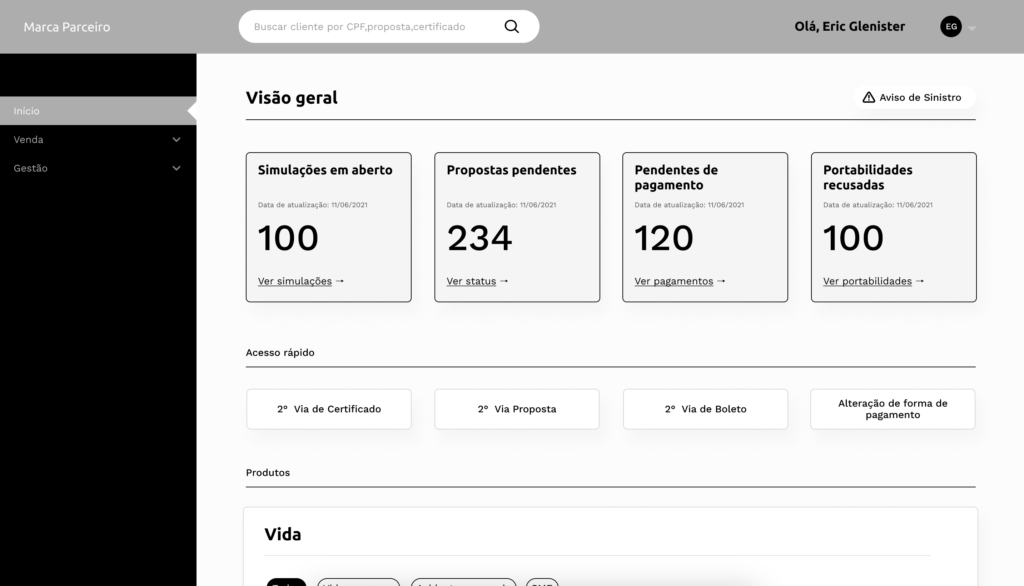
• Centralized Home
• Post-selling
• Admin tools
Iteration
• Comercial validation
• Security and TI validation
• User validation
• Engineering validation
Design System
• Setup
• Componentize
• Validation
• Documentation
• Handover
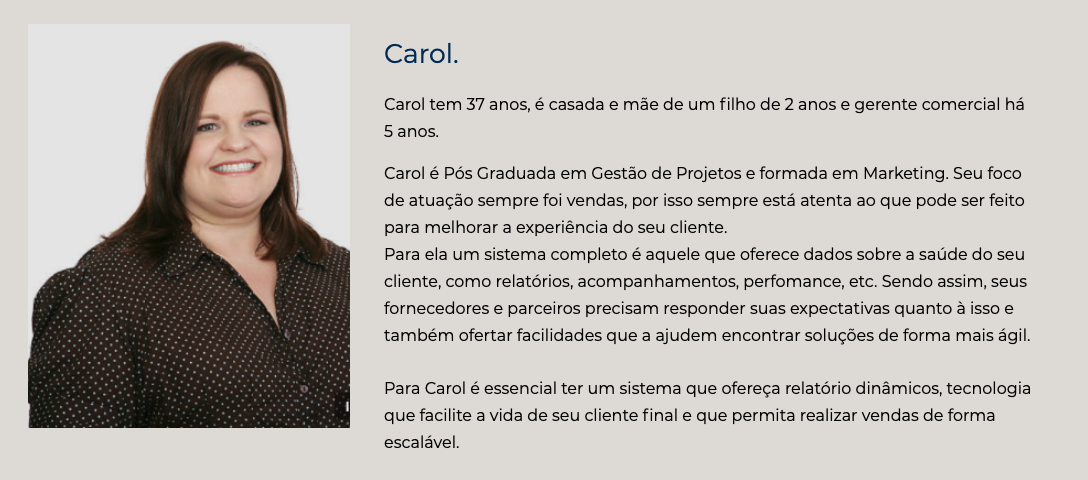
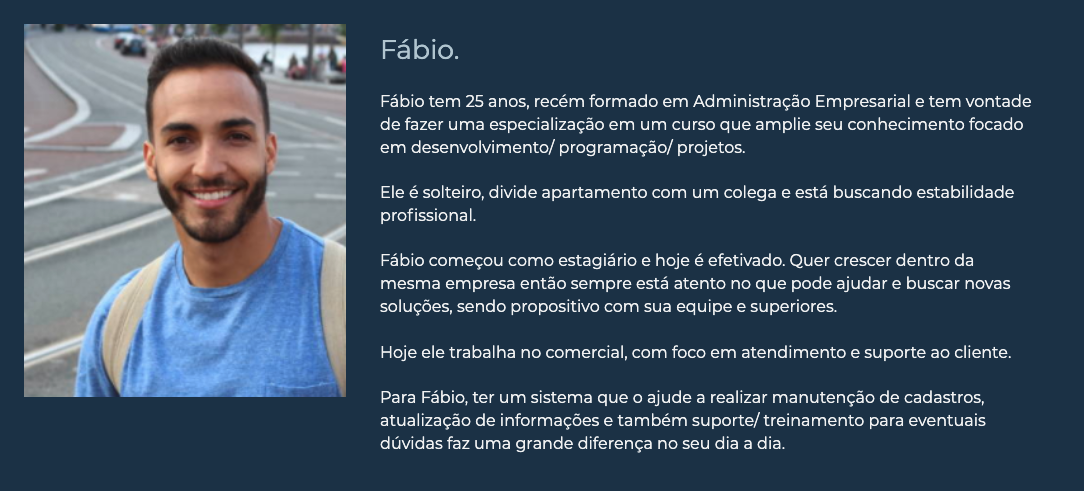
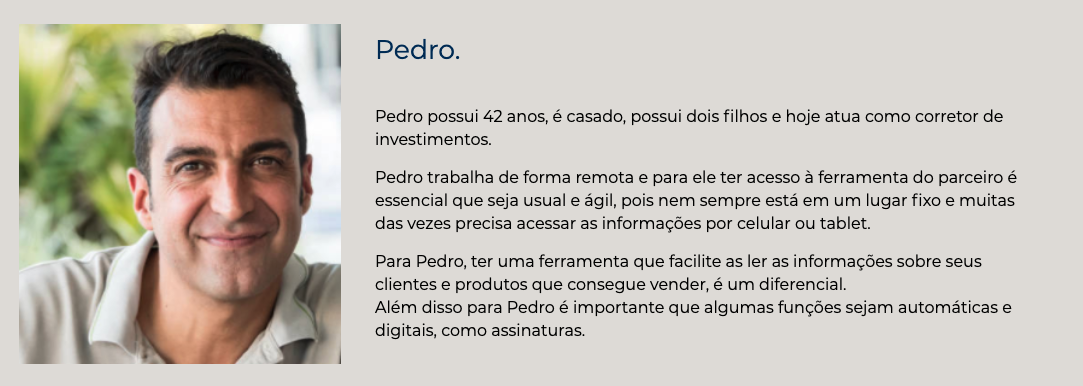
Proto persona cards, to quick check features in / out hypothesis that should be present and also helping the prioritization process, based on user pain points.
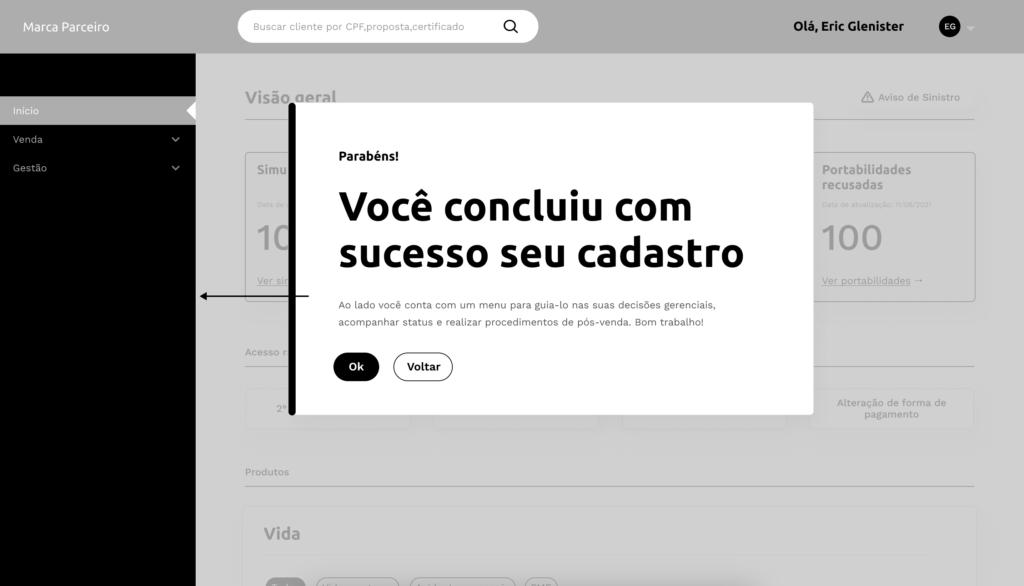
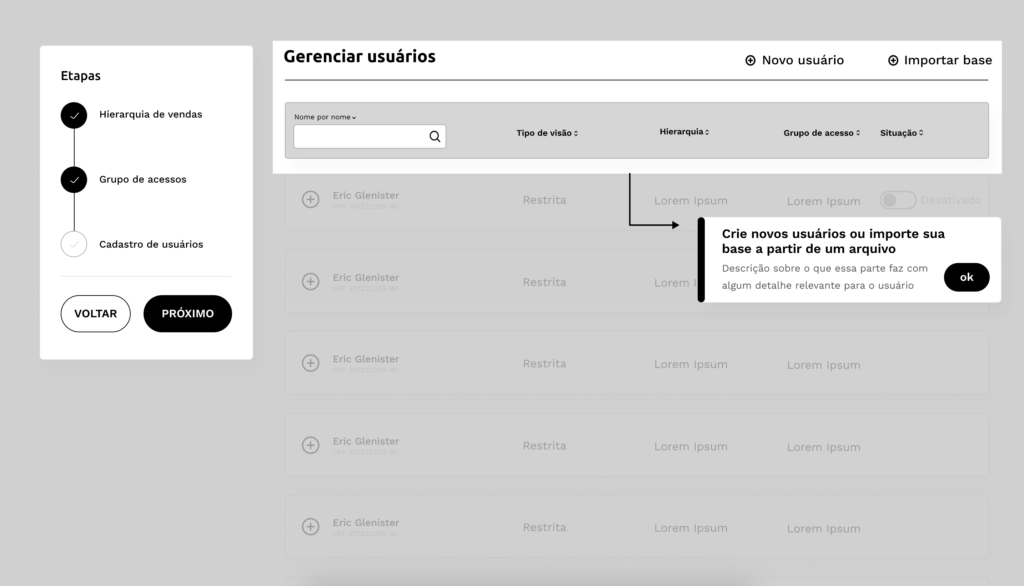
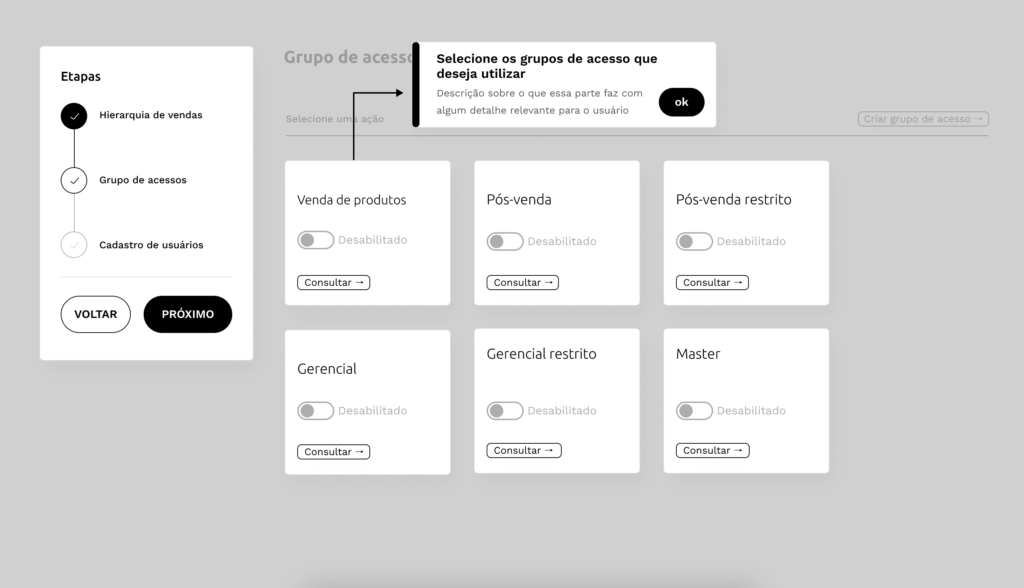
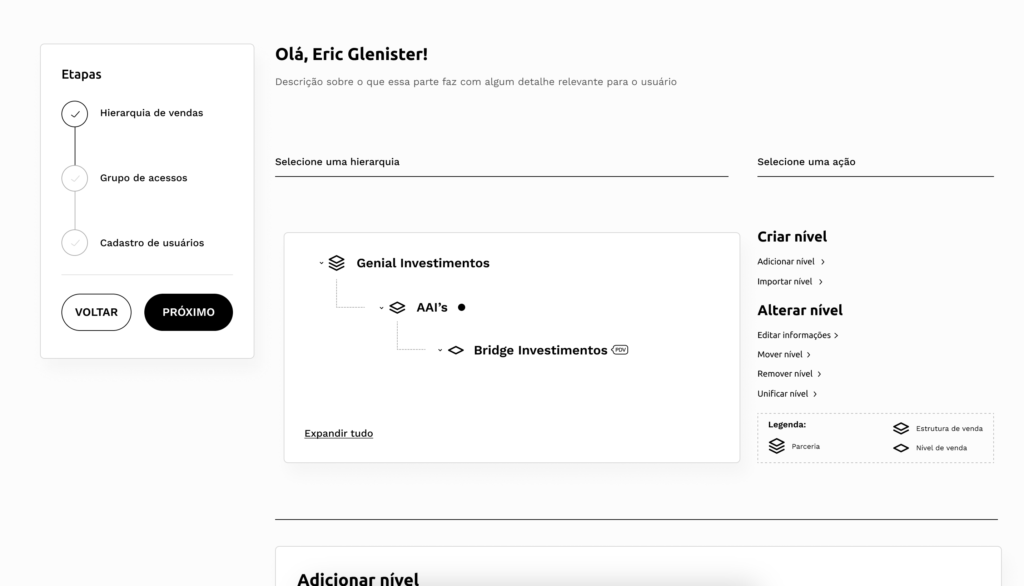
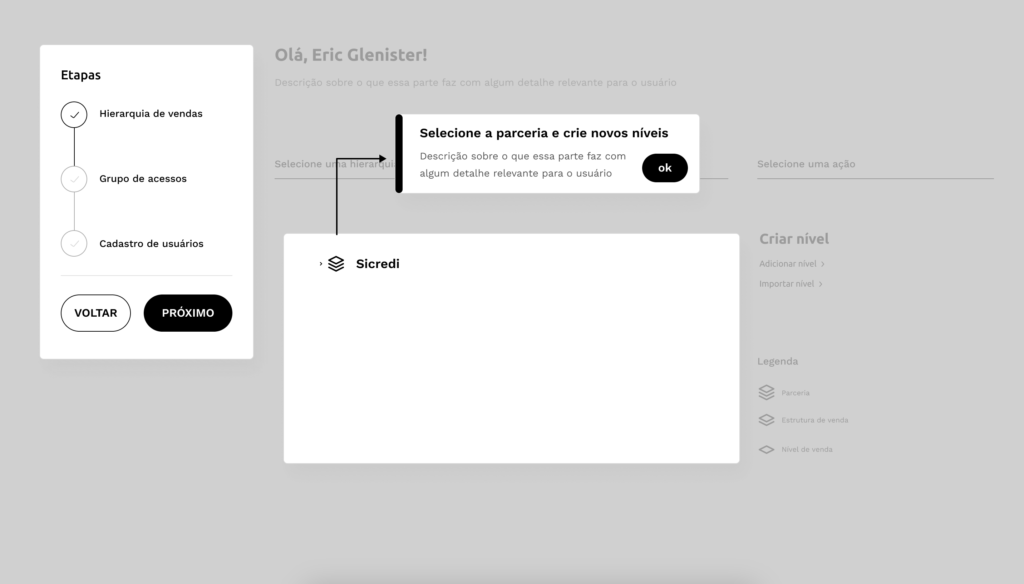
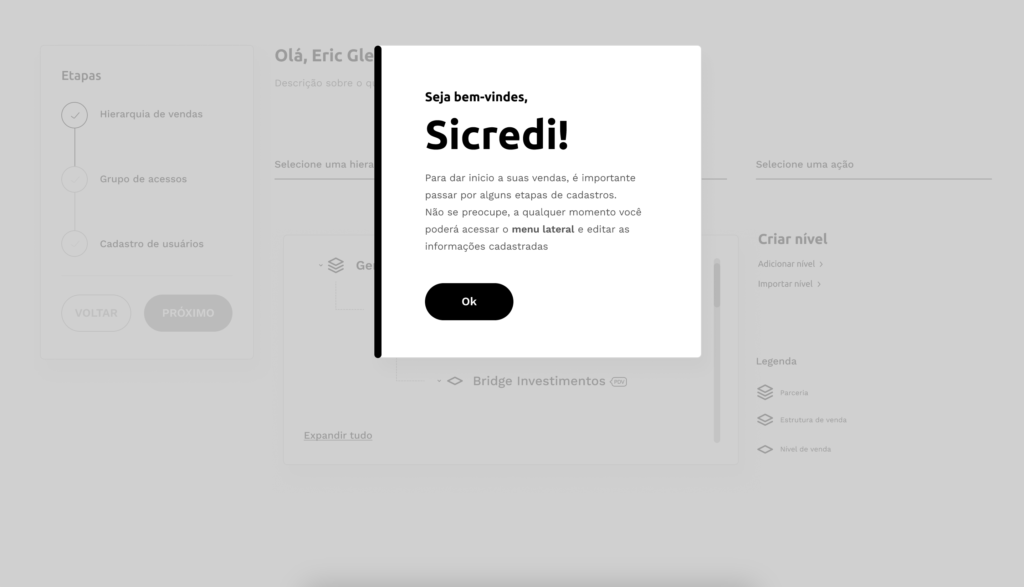
Lo-fis prototype: tested with users and stakeholders. Does a introductional step-by-step tutorial cover the lack of information related by interviewees?
Outgoing Key Product Indicators, and metrics
Net promoted score measure customer satisfaction, asking “from 0 to 10, how much would you recommend our company to friends?” The formula to calculate the NPS is: % promoting customers (grades 9 and 10) – % detracting customers (grades 0 to 6) = NPS
• Based on the NPS score, it is possible to compare with the market (competitors);
• Through the results, you can generate insights for improvements;
• Importance to identify bottlenecks in your product/service in face of inputs raised by users.
Metric that indicates how much your company has lost in revenue or customers. To calculate churn, just divide the number of customers you have lost by the end of the period by the total number of customers you have started. Example: if you lost 10 customers out of 100 = 10% churn rate.
• Observe patterns that customers may bring of need/doubt, so it is possible to design an action plan for improvements.
Lifetime value estimates the income of a customer in the company. In other words, a customer’s LTV is how much money they will give your company for as long as they buy from you.
• Find specific failures that lead customers to give up the service;
• Find opportunities that are underexploited to improve acquisition and retention processes;
• Define marketing budget, so that the expense is not so high with acquisitions and bring future losses.
Result of the sum of investments made in Marketing and Sales divided by the number of customers conquered in the same period. It is an essential metric for measuring a company’s financial health.
• We can draw a balance between (CAC x LTV) and thus obtain the result of how much was spent to acquire the lead (user) x how much it will “add” when it becomes a customer. The best scenario is to have a low CAC and an LTV as high as possible, that is, to spend little and profit a lot.